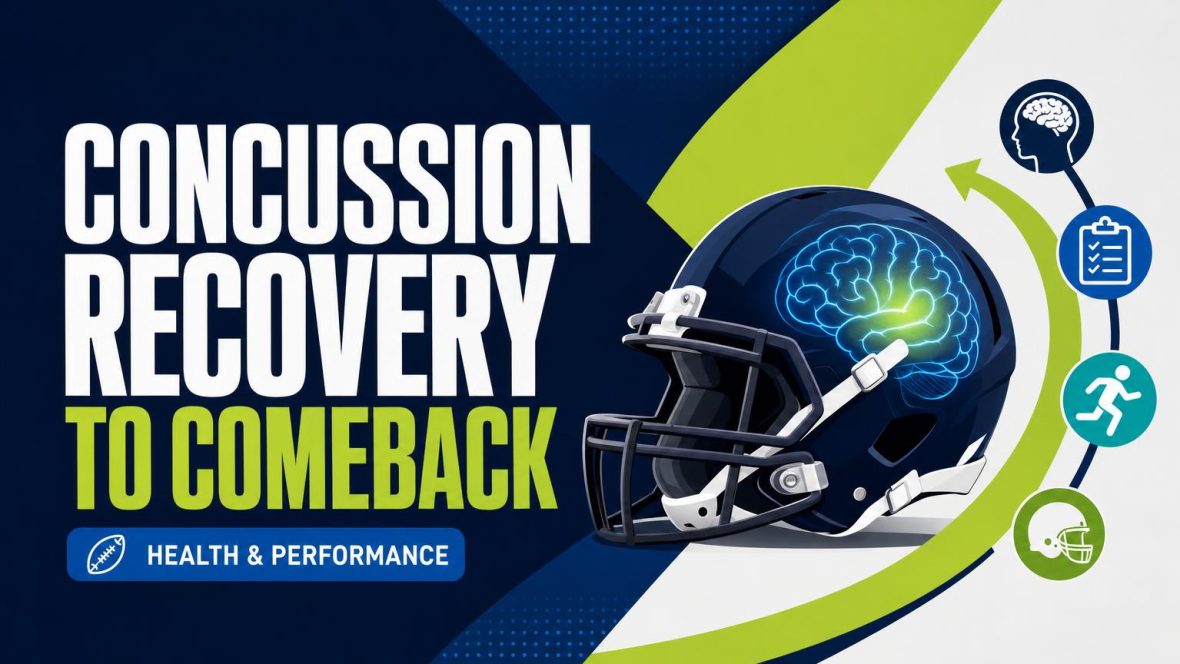
A convincing walk off the pitch can hide a brain that is not ready to play.
A player takes a heavy hit, answers questions, and walks down the tunnel unaided. Within minutes, broadcasts and social feeds may attach a return date—but those visible signs reveal little about recovery. Concussion symptoms can emerge or worsen over hours, while balance, memory, reaction time, sleep, and exertion tolerance may change between assessments.
Top Free Bets for October
BetUS
200% up to $1,000
18+. Full T&C's apply. Sports bonus: 100% match up to $500. Casino bonus: 100% match up to $500. Enter promo code NEW200 at deposit and get up to a $1000 bonus. Valid on your first three (3) deposits. Available for all deposit methods. Minimum deposit of $50.
18+. Full terms apply. The Bet Back Bonus is available for new customers on first-time deposits of $50 or more. To redeem, select the offer in the cashier while completing your first deposit. Make your pick(s) in the Sportsbook and then select ‘Opt In to Use Your Bonus’. A Bet Back Bonus pop-up will display, select ‘Claim’ and then enter the risk amount to place your bet. If it wins, you keep your profits. If it loses, get 100% of your risk refunded as Free Play with only 1-time rollover. Free Play can then be used to place bets in the Sportsbook and earn cash. Additional T&Cs apply, please visit MyBookie to access the Help Center or contact Live Chat for more details.
18+. Full T&C's apply. This promotion is available only to new accounts in North America. Freeplay amount must be wagered five times (5x rollover) before it becomes eligible for withdrawal. Only prematch (sportsbook) bets count toward the 5x rollover requirement. Each person may claim only one bonus. If a customer creates multiple accounts to exploit this promotion, bet105 will mark all related accounts as ineligible and reclaim the funds. If a client receives more than two free bets without making a deposit, any winnings from those bets will be forfeited. This promotion applies only to the initial deposit or if specifically assigned by bet105.
18+. Full terms apply. New BUSR members only. Minimum deposit of $50 required per qualifying deposits. Codes 300SB1, 300SB2, and 300SB3 must be entered at the time of each corresponding deposit.
Each code is valid one time only. Each bonus code must be claimed at least 24 hours apart. Only one promo code may be applied per deposit. A 20x rollover requirement applies to the combined total of your initial deposit and bonus before any withdrawal can be made. Redeemable in the Sportsbook only. BUSR management reserves the right to modify, suspend, or cancel this promotion at any time. Redeem each promo code in the cashier to get your bonus. Must be 18 or older. Please gamble responsibly. General House Rules Apply.
18+. Full terms apply. 100% up to $500 Bonus. Valid for non-crypto payment methods only. Minimum deposit amount $50. This offer is not available to customers from Canada or Mexico. The bonus code must be redeemed immediately after the deposit and before a wager has been placed. The sum of the deposit and the bonus are subject to rollover requirements of 12x at min. odds of -200 (1.5) before a new code can be redeemed. Max. $500 of each bet count towards the rollover requirements. Only bets placed on options that take place count towards the rollover requirements. Wagers on Horse Racing and Boosted Odds do not count towards the rollover requirements. All general Everygame Sportsbook rules apply.
21+. Full T&C's apply. Bonus: 35% of qualifying deposit, up to $105. Rollover: 8× (only sports action counts towards the rollover) deposit + bonus. Expiry: 7 days after credit. Hold period: 2 weeks. Payouts allowed only after rollover and hold period are completed. Example: Deposit $200 → Receive $50 Sports Free Play. Sports Free Play Rules: see the BetAnything General Reward Rules for eligible sports, wager types, odds, and rollover rules.
18+. Full T&C's apply. This bonus can only be redeemed on your first deposit. Rollover is 5x Sports/5x Horses/30x Casino on both the initial deposit and the bonus amount. Rollover in our Sportsbook, for winning wagers, will be determined by the lesser of your risk or win amount at the time of wager settlement; for losing wagers your risk amount will be credited to your rollover contribution. Bonus funds cannot be used for play on Live Dealer games. Live Dealer play does not count toward meeting Casino rollover requirements for withdrawal. If a withdrawal is made before the bonus terms are met, all bonus funds as well as any money earned by wagering the bonus will be forfeited.
A normal CT or MRI is reassuring when doctors are checking for bleeding or another structural injury; it does not prove recovery from concussion. Likewise, being alert or feeling “fine” on the sideline is not medical clearance. Once concussion is suspected, same-day return is off the table. The timeline instead depends on repeated clinical assessment, followed by gradual activity only as symptoms settle and each stage is tolerated.
Recovery milestones
What “recovered” actually means
Progress is measured by function, not simply by days since the injury.
Recovery is not a single moment. A player may feel well before being ready for full-contact football, so injury recovery and return dates should be treated as staged decisions rather than fixed appointments.
Four practical milestones
Symptom improvement: Headache, dizziness, nausea, light sensitivity, or mental fog settle at rest and do not worsen with basic activity.
Normal daily activity: School, work, screen use, travel, and ordinary household tasks are manageable without a significant symptom flare.
Unrestricted training: The player progresses through aerobic exercise, football drills, harder non-contact work, and—when medically permitted—contact practice without symptoms returning.
Competition clearance: A qualified healthcare professional confirms that the return-to-play progression has been completed and match participation is appropriate.
For many adults, two to four weeks provides broad context for concussion recovery. It is not a deadline, target, or guarantee: some players recover sooner, while others need substantially longer because symptoms persist or return as activity increases.
Children and adolescents are usually managed more conservatively. Their return to learning and normal daily routines also matters, and each exercise stage may require extra time. If symptoms reappear at any point, progression should pause and the player should return to the last tolerated level under medical guidance.
Why the hit does not predict the timeline
A dramatic collision can produce brief symptoms, while a routine-looking tackle can lead to problems lasting weeks. Video shows body movement, not how the brain responded; helmet noise, impact angle, anticipation, neck position, and rotational forces further complicate the picture. Loss of consciousness is concerning, but its absence does not rule out concussion or guarantee a quick recovery.
Concussion mainly causes a temporary disruption of brain function. Symptoms and tolerance for activity may change over the first hours or days, so recovery estimates depend more on the player’s clinical course than on how forceful the hit appeared.
Factors associated with a more complicated or prolonged recovery can include:
numerous or severe symptoms soon after injury
previous concussions or closely spaced head impacts
a personal or family history of migraine
poor sleep before or after the injury
anxiety, depression, or other mental health difficulties
younger age, particularly during adolescence
These factors influence risk rather than determine an exact deadline. Another head impact before recovery may worsen symptoms and raises safety concerns, which is why return-to-play decisions require repeated assessment rather than replay analysis.
Immediate response
From first suspicion to medical follow-up
01
Stop play immediately
Any player with a suspected concussion should leave the field and take no further part that day. Until assessed, unnecessary movement should be avoided if a neck injury is possible.
02
Check for immediate danger
Airway, breathing, circulation, consciousness and possible neck injury take priority. Emergency care is needed rather than a routine concussion check when serious injury is suspected.
03
Perform a structured assessment
A trained professional may check symptoms, memory, balance, coordination and neurological function. Sideline tools provide only a snapshot: a normal result cannot rule out concussion, and symptoms may appear later.
04
Monitor after leaving the field
The player should remain with a responsible adult and follow medical instructions. Symptoms, alertness and behaviour should be watched closely; driving, alcohol and risky activity should be avoided.
05
Arrange clinical follow-up
A healthcare professional should review the player, particularly if symptoms persist or change. Follow-up establishes the recovery plan and determines when a gradual return to activity can begin.
Emergency signs
Deterioration needs urgent action
Call emergency services for worsening headache, repeated vomiting, seizure, increasing confusion or agitation, slurred speech, weakness or numbness, unequal pupils, severe neck pain, loss of consciousness, or difficulty waking. Do not leave the player alone or allow an unassisted return to the field.
Early recovery
The first 48 hours after concussion
Rest should reduce strain without requiring complete inactivity.
For the first 24–48 hours, clinicians usually recommend relative rest: limiting activities that clearly worsen symptoms, not staying in a dark room or bed all day. Normal sleep is helpful; waking a player repeatedly is generally unnecessary unless a clinician advises monitoring.
After this brief period, light activity can begin under clinical guidance. Easy walking and simple daily tasks are reasonable if symptoms rise only mildly and settle soon afterward. A stronger or lasting increase means the activity should be reduced.
Practical precautions include:
Keep a regular sleep schedule and drink enough water; eat normal meals.
Use screens, reading and study in short blocks, with breaks before symptoms build.
Avoid alcohol and recreational drugs, which can worsen symptoms and cloud assessment.
Do not drive while dizzy, slowed, visually affected or taking sedating medication.
Check pain relief and other medicines with a clinician; some drugs may mask symptoms or increase bleeding risk.
Avoid training, rough play, cycling and any situation where another head impact is possible.
Safety
No return to contact yet
Feeling better at rest does not mean the brain is ready for football. Contact activity should wait until the supervised return-to-play process reaches that stage and medical clearance is given.
Six-stage progression
How the return-to-play ladder works
01
1. Resume ordinary activity
The player gradually returns to normal daily activities without provoking more than a mild, brief increase in symptoms. School or work recovery should remain part of the plan.
02
2. Begin light aerobic exercise
Walking or easy stationary cycling can raise the heart rate gently. Resistance training and any risk of collision are still avoided.
03
Add football-specific movement
Running, changing direction and individual ball work can resume at moderate intensity, provided there is no risk of head impact.
04
Progress to non-contact training
Harder drills, passing patterns and progressive resistance work restore fitness, coordination and confidence. Team involvement is limited to activities where contact can be reliably excluded.
05
5. Join authorized contact practice
Full training follows medical clearance and allows coaching staff to assess normal football skills under match-like demands.
06
6. Return to matches
Competitive play comes only after full-contact practice is completed without symptoms and final clearance requirements are met.
Each stage usually takes at least 24 hours, so an uncomplicated progression still spans several days. If symptoms recur, activity stops and the player generally returns to the previous tolerated stage after symptoms settle. Clinical guidance sets the medical progression; leagues, governing bodies and youth competitions may impose longer stand-down periods or additional clearance rules.
What medical clearance confirms
Feeling symptom-free is necessary, but it is not the only requirement.
Medical clearance is not based on a player simply reporting that symptoms have disappeared. Normal daily function should be restored first: school, work, reading, screen use and routine movement should no longer provoke significant problems. The player must also tolerate progressively harder exercise without symptoms returning.
A clinician may consider the neurological examination alongside symptom questionnaires, balance checks, cognitive testing and, where available, pre-injury baseline results. These tests provide supporting evidence, not a single pass-or-fail answer; scores can vary with effort, fatigue, practice effects and the quality of the baseline. Clinical judgment and the pattern of recovery remain central.
Clearance also requires completion of the mandated return-to-play stages, including full-contact practice when permitted, with no concerning response during or after each step. Requirements vary by league and age group, so the responsible healthcare professional must follow the applicable protocol.
Finally, medical clearance is not the same as team selection. A player may be approved for unrestricted training yet still need conditioning, tactical work or confidence before competing. Coaches may therefore prefer a return from injury without an immediate start, even when the medical process is complete.
Reality check
Three shortcuts that do not prove recovery
Assumption
No symptoms at rest means the player is ready.
What matters
Readiness must also hold during progressively harder exercise and football-specific training.
Why
Headache, dizziness or slowed thinking may return only when heart rate, movement and visual demands increase. Poor sleep can also worsen the next day, which is one reason expected recovery dates may be revised.
Assumption
A normal brain scan rules out concussion.
What matters
Routine CT or MRI often appears normal because concussion usually affects brain function rather than visible structure.
Why
Imaging is mainly used when clinicians suspect bleeding, fracture or another structural injury. Assessment still depends on symptoms, examination findings and response to exertion.
Assumption
Missing one match provides enough recovery time.
What matters
The calendar cannot show whether the player has tolerated every return-to-play stage.
Why
Neck pain, headache, balance problems, motion sensitivity or symptoms during training can pause progression. After a setback, the player usually returns to the previous symptom-free level rather than pushing toward a fixed match date.
Reassessment
When symptoms do not settle
Persistent or repeatedly returning symptoms warrant another clinical review. The cause may need more specific treatment rather than extra rest alone—for example, graded aerobic exercise, vestibular or vision-based therapy, neck rehabilitation, headache management, or support for disrupted sleep and mood. New or worsening neurological signs require urgent assessment.
Reading updates
What each team update really means
Removed immediately
Any suspected concussion means no return that day.
Monitored
Symptoms can emerge or worsen after the initial assessment.
Symptom-free
This marks progress, not readiness for contact or competition.
Individual exercise
The player is testing controlled exertion away from team contact.
Non-contact, then full training
Non-contact work precedes normal practice; each stage must be tolerated without significant symptom return.
Cleared, then selected
Medical clearance permits availability. Coaches still decide selection—a crucial distinction when betting around team news.
Conclusion
The sequence is non-negotiable: immediate removal, monitoring, staged exertion, then medical clearance. Feeling well cannot justify a shortcut back to contact, and clearance does not guarantee selection.
Top Free Bets for October
BetUS
200% up to $1,000
18+. Full T&C's apply. Sports bonus: 100% match up to $500. Casino bonus: 100% match up to $500. Enter promo code NEW200 at deposit and get up to a $1000 bonus. Valid on your first three (3) deposits. Available for all deposit methods. Minimum deposit of $50.
18+. Full terms apply. The Bet Back Bonus is available for new customers on first-time deposits of $50 or more. To redeem, select the offer in the cashier while completing your first deposit. Make your pick(s) in the Sportsbook and then select ‘Opt In to Use Your Bonus’. A Bet Back Bonus pop-up will display, select ‘Claim’ and then enter the risk amount to place your bet. If it wins, you keep your profits. If it loses, get 100% of your risk refunded as Free Play with only 1-time rollover. Free Play can then be used to place bets in the Sportsbook and earn cash. Additional T&Cs apply, please visit MyBookie to access the Help Center or contact Live Chat for more details.
18+. Full T&C's apply. This promotion is available only to new accounts in North America. Freeplay amount must be wagered five times (5x rollover) before it becomes eligible for withdrawal. Only prematch (sportsbook) bets count toward the 5x rollover requirement. Each person may claim only one bonus. If a customer creates multiple accounts to exploit this promotion, bet105 will mark all related accounts as ineligible and reclaim the funds. If a client receives more than two free bets without making a deposit, any winnings from those bets will be forfeited. This promotion applies only to the initial deposit or if specifically assigned by bet105.
18+. Full terms apply. New BUSR members only. Minimum deposit of $50 required per qualifying deposits. Codes 300SB1, 300SB2, and 300SB3 must be entered at the time of each corresponding deposit.
Each code is valid one time only. Each bonus code must be claimed at least 24 hours apart. Only one promo code may be applied per deposit. A 20x rollover requirement applies to the combined total of your initial deposit and bonus before any withdrawal can be made. Redeemable in the Sportsbook only. BUSR management reserves the right to modify, suspend, or cancel this promotion at any time. Redeem each promo code in the cashier to get your bonus. Must be 18 or older. Please gamble responsibly. General House Rules Apply.
18+. Full terms apply. 100% up to $500 Bonus. Valid for non-crypto payment methods only. Minimum deposit amount $50. This offer is not available to customers from Canada or Mexico. The bonus code must be redeemed immediately after the deposit and before a wager has been placed. The sum of the deposit and the bonus are subject to rollover requirements of 12x at min. odds of -200 (1.5) before a new code can be redeemed. Max. $500 of each bet count towards the rollover requirements. Only bets placed on options that take place count towards the rollover requirements. Wagers on Horse Racing and Boosted Odds do not count towards the rollover requirements. All general Everygame Sportsbook rules apply.
21+. Full T&C's apply. Bonus: 35% of qualifying deposit, up to $105. Rollover: 8× (only sports action counts towards the rollover) deposit + bonus. Expiry: 7 days after credit. Hold period: 2 weeks. Payouts allowed only after rollover and hold period are completed. Example: Deposit $200 → Receive $50 Sports Free Play. Sports Free Play Rules: see the BetAnything General Reward Rules for eligible sports, wager types, odds, and rollover rules.
18+. Full T&C's apply. This bonus can only be redeemed on your first deposit. Rollover is 5x Sports/5x Horses/30x Casino on both the initial deposit and the bonus amount. Rollover in our Sportsbook, for winning wagers, will be determined by the lesser of your risk or win amount at the time of wager settlement; for losing wagers your risk amount will be credited to your rollover contribution. Bonus funds cannot be used for play on Live Dealer games. Live Dealer play does not count toward meeting Casino rollover requirements for withdrawal. If a withdrawal is made before the bonus terms are met, all bonus funds as well as any money earned by wagering the bonus will be forfeited.
Hi I'm Andy and I love to report on the latest football scores and Tables. I also like to have a bet on the football and occasionaly on the horses. On this website I have new bookmaker offers listed that will give you free bets and bonuses to help you beat the bookies. Enjoy your stay.