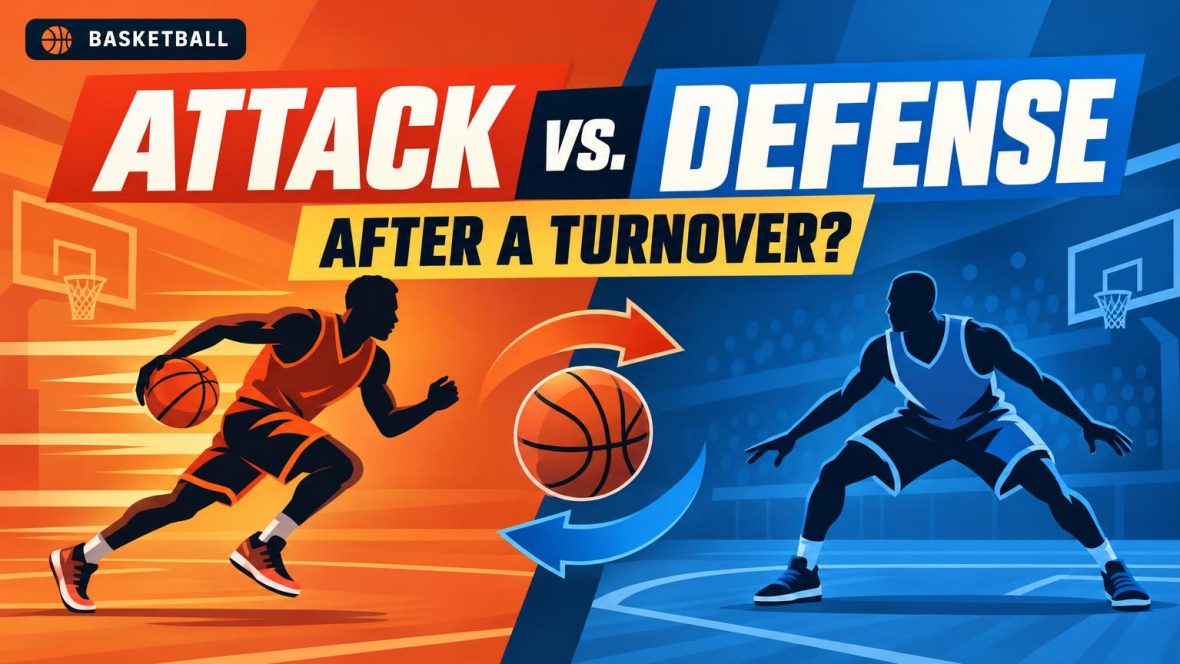
The first second after a turnover rarely looks organised.
A midfielder collects a loose ball, looks up, and finds the forward pass blocked. Teammates are still positioned to defend, so the attack may need a sideways pass while runners move ahead. Minutes later, the same side loses the ball with both full-backs high upfield. The opponent now has space to break into before they can recover. Possession has switched; positioning has not. One transition is about finding a way forward; the other is about protecting the space left behind.
Top Free Bets for October
BetUS
200% up to $1,000
18+. Full T&C's apply. Sports bonus: 100% match up to $500. Casino bonus: 100% match up to $500. Enter promo code NEW200 at deposit and get up to a $1000 bonus. Valid on your first three (3) deposits. Available for all deposit methods. Minimum deposit of $50.
18+. Full terms apply. The Bet Back Bonus is available for new customers on first-time deposits of $50 or more. To redeem, select the offer in the cashier while completing your first deposit. Make your pick(s) in the Sportsbook and then select ‘Opt In to Use Your Bonus’. A Bet Back Bonus pop-up will display, select ‘Claim’ and then enter the risk amount to place your bet. If it wins, you keep your profits. If it loses, get 100% of your risk refunded as Free Play with only 1-time rollover. Free Play can then be used to place bets in the Sportsbook and earn cash. Additional T&Cs apply, please visit MyBookie to access the Help Center or contact Live Chat for more details.
18+. Full T&C's apply. This promotion is available only to new accounts in North America. Freeplay amount must be wagered five times (5x rollover) before it becomes eligible for withdrawal. Only prematch (sportsbook) bets count toward the 5x rollover requirement. Each person may claim only one bonus. If a customer creates multiple accounts to exploit this promotion, bet105 will mark all related accounts as ineligible and reclaim the funds. If a client receives more than two free bets without making a deposit, any winnings from those bets will be forfeited. This promotion applies only to the initial deposit or if specifically assigned by bet105.
18+. Full terms apply. New BUSR members only. Minimum deposit of $50 required per qualifying deposits. Codes 300SB1, 300SB2, and 300SB3 must be entered at the time of each corresponding deposit.
Each code is valid one time only. Each bonus code must be claimed at least 24 hours apart. Only one promo code may be applied per deposit. A 20x rollover requirement applies to the combined total of your initial deposit and bonus before any withdrawal can be made. Redeemable in the Sportsbook only. BUSR management reserves the right to modify, suspend, or cancel this promotion at any time. Redeem each promo code in the cashier to get your bonus. Must be 18 or older. Please gamble responsibly. General House Rules Apply.
18+. Full terms apply. 100% up to $500 Bonus. Valid for non-crypto payment methods only. Minimum deposit amount $50. This offer is not available to customers from Canada or Mexico. The bonus code must be redeemed immediately after the deposit and before a wager has been placed. The sum of the deposit and the bonus are subject to rollover requirements of 12x at min. odds of -200 (1.5) before a new code can be redeemed. Max. $500 of each bet count towards the rollover requirements. Only bets placed on options that take place count towards the rollover requirements. Wagers on Horse Racing and Boosted Odds do not count towards the rollover requirements. All general Everygame Sportsbook rules apply.
21+. Full T&C's apply. Bonus: 35% of qualifying deposit, up to $105. Rollover: 8× (only sports action counts towards the rollover) deposit + bonus. Expiry: 7 days after credit. Hold period: 2 weeks. Payouts allowed only after rollover and hold period are completed. Example: Deposit $200 → Receive $50 Sports Free Play. Sports Free Play Rules: see the BetAnything General Reward Rules for eligible sports, wager types, odds, and rollover rules.
18+. Full T&C's apply. This bonus can only be redeemed on your first deposit. Rollover is 5x Sports/5x Horses/30x Casino on both the initial deposit and the bonus amount. Rollover in our Sportsbook, for winning wagers, will be determined by the lesser of your risk or win amount at the time of wager settlement; for losing wagers your risk amount will be credited to your rollover contribution. Bonus funds cannot be used for play on Live Dealer games. Live Dealer play does not count toward meeting Casino rollover requirements for withdrawal. If a withdrawal is made before the bonus terms are met, all bonus funds as well as any money earned by wagering the bonus will be forfeited.
The period just after a team wins the ball, while it decides whether to exploit space left by opponents or keep possession. A regain near the opponent’s goal may offer an immediate chance; a regain deep in its own half may not.
Defensive transition
The period just after a team loses the ball, while players try to delay the attack, win it back, or recover their defensive positions. The same change of possession starts one side’s attacking transition and the other’s defensive transition.
Settled play
The transition ends when the immediate advantage or danger has passed: the team on the ball has established a controlled attack, or the defending team has regained its shape.
Turnover context
The location of the ball and the positions of nearby players matter as much as the loss itself. That is why different ways of losing possession can leave a team facing very different threats.
Read the turnover before reacting
A turnover does not automatically call for a counterattack or an immediate press. The first useful question is what the players can do from where they already are.
Ball location: Winning the ball near the opponent’s goal shortens the route to a shot; losing it there may put several teammates close enough to press. A turnover near the defending goal leaves less room for either side to recover from a mistake.
Body orientation: A player facing forward can spot a pass or carry into space sooner than one receiving with their back to goal. A defender who has turned to chase may struggle to stop a runner.
Available space: An open channel makes a forward run tempting, but space behind an attacking team can be just as inviting to its opponent.
Support: The ball carrier needs a passing option; a pressing player needs teammates close enough to block exits or challenge the next pass.
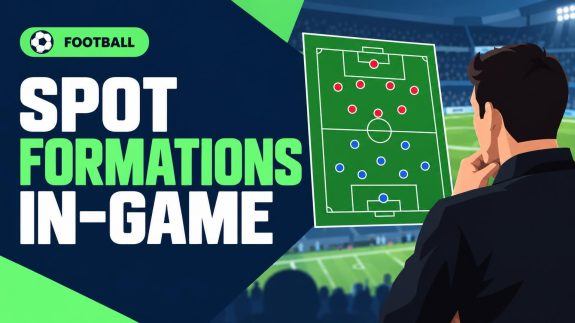
Those options were often set up before possession changed. If a team attacks with both full-backs high and its midfielders ahead of the ball, an unsuccessful press could leave its centre-backs exposed. Keeping a midfielder behind the attack gives them cover and may let a nearby teammate press more confidently. These starting positions, shaped partly by the team’s tactics and formation, matter more than a blanket instruction to go forward or win the ball back.
Turning a regain into an attack
The player who wins the ball often has only a moment before the opponent’s nearest players recover. A first touch away from pressure does more than protect possession: it opens the body to see teammates and space farther forward. A touch straight into a crowded lane can close those options before the attack begins.
The next glance forward answers a practical question: is there a route to goal, or just open grass that looks promising? A defender stepping up to challenge may leave a runner free behind. If the ball winner can make that pass before the defender turns, the attack reaches the exposed space without needing several dribbles.
If the passing lane is blocked but opponents are retreating, carrying the ball can force someone to step out. That movement may create the pass that was missing at first. A nearby teammate can help by running beyond the ball to stretch the defense, or offering a short passing angle so the ball winner is not trapped against the touchline.
Speed matters only when it serves an opening. A hopeful pass into three defenders, or a sprint with no teammate arriving in support, can hand possession straight back. When the forward route is shut, a secure sideways or backward pass keeps the ball while teammates find useful positions. The strongest attacking transition is not always the fastest move; it is the fastest workable one.
Step List
01
Use an open lane
If a defender has stepped out and left space behind, a quick pass or carry can put the attack into that gap. The runner needs a reachable ball, not a hopeful one launched before support is ready.
02
Keep it when the route closes
If the forward lane disappears, a short pass to a nearby teammate can preserve possession. That gives the side another chance to attack rather than forcing a pass into a crowded area.
03
Shift away from pressure
When opponents crowd the ball, an angled pass toward a free teammate can start escaping pressure after regaining the ball. Moving it out of the tight area buys time for others to move up and offer options.
04
Take less risk close to goal
A regain near one's own penalty area changes the cost of a mistake: a speculative first pass may hand the ball straight back in shooting range. A secure pass to the side, or a firm clearance when no safe pass exists, is often the better start.
When the attack loses the ball
A team can lose possession while several players are still moving toward the opponent’s goal. In that moment, the danger is not just the lost ball: it is the open route behind those players. The first defensive actions need to buy time while teammates get back into useful positions.
The nearest player can pressure the ball carrier by closing the distance and slowing the first pass or dribble. That does not always mean trying to win the ball immediately. Charging in and getting beaten may leave an even clearer path forward. A controlled approach can steer the carrier away from the most dangerous space.
At the same time, another player can block a dangerous pass, often by standing between the ball and a forward runner. Players farther away recover into cover: a midfielder drops toward the center, or a defender shifts across to protect the space behind an advanced teammate. These jobs work together. Pressure matters more when an easy pass is blocked, and the recovery run matters more if the ball carrier has been slowed.
For example, if a winger loses the ball near the opposition box while the full-back is high upfield, the winger might slow the new ball carrier, a midfielder might screen the pass into the center, and a center-back might move across to cover the open flank. That immediate pressure is not necessarily an organized high press. A high press depends on coordinated movement across the team; after a turnover, the nearest player may simply be buying a few seconds for the defense to recover.
Press or protect the middle?
The first seconds after a loss offer a chance to win the ball back. If teammates are close, the new carrier takes a poor touch, and passing outlets are limited, one player can close down the ball while others block the nearest passes. That brief response is counter-pressing after a turnover. It differs from a sustained high press, which requires the team to keep its shape as the opponent moves the ball.
Pressure is riskier when teammates are too far away to help or the opponent receives facing upfield. A clean pass can bypass a lone challenger and leave space behind. In that case, retreating players can narrow the gap between lines and protect central space, even if it means allowing a pass toward the touchline. Slowing the attack gives teammates time to recover.
The choice works only when teammates read it together. If one player charges forward while the next line drops without blocking a pass, the opponent can play straight through the gap. A call or clear first movement helps the group act as one: squeeze around a vulnerable ball carrier, or drop together to delay the attack. Once the immediate chance is gone, pressing high needs a new, coordinated setup rather than continued chasing.
The same turnover, two reactions
Blue is building an attack when a square pass near halfway goes straight to a Red midfielder. Blue’s right-back has moved high up the pitch, leaving space behind. For Red, the interception is a chance to attack before Blue can reset. For Blue, the same moment begins a defensive transition: the players nearest the ball must buy time for the right-back to recover.
The forward pass is Red’s first opening. The midfielder takes a touch toward the space behind Blue’s right-back and passes to a winger running into that channel. If the touch takes too long, a Blue midfielder who has turned back toward the ball can close the passing lane. A quick pass gives the winger a head start; a delayed one may leave Red keeping possession instead of breaking forward.
The supporting run changes what the winger can do next. Red’s striker runs through the middle, offering a pass or drawing Blue’s centre-back away from the winger. If the striker drifts too close to the winger, one defender may be able to cover both players. Holding a separate central position gives Blue another run to watch.
Blue’s response is not simply to chase the ball. The nearby midfielder presses the passer, the centre-back protects the middle, and the right-back turns to recover down the flank. Even if the winger receives the pass, that recovery can delay a cross until more Blue players get back. Red is trying to use a brief gap; Blue is trying to make it disappear.
Watching a turnover
Judge the opening, not the ending
Pause at the change of possession
Note where the ball is and which players are ahead of it. A promising break may already have defenders between the ball and goal.
Count the immediate choices
Look for a forward pass, a safe outlet, and room to carry. If none is available, keeping the ball may be the strongest option.
Watch the nearest opponents
Can they reach the ball without leaving an easy pass behind them? Their position matters more than how urgently they run.
Track who fills the gaps
Notice whether teammates offer passing angles or recover into covering positions before the other side can exploit the space.
Conclusion
A shot does not prove the regain was well played, and a clearance does not prove the response was poor. The useful question is which side made its next options clearer first: the team offering routes for the ball, or the team closing them.
Top Free Bets for October
BetUS
200% up to $1,000
18+. Full T&C's apply. Sports bonus: 100% match up to $500. Casino bonus: 100% match up to $500. Enter promo code NEW200 at deposit and get up to a $1000 bonus. Valid on your first three (3) deposits. Available for all deposit methods. Minimum deposit of $50.
18+. Full terms apply. The Bet Back Bonus is available for new customers on first-time deposits of $50 or more. To redeem, select the offer in the cashier while completing your first deposit. Make your pick(s) in the Sportsbook and then select ‘Opt In to Use Your Bonus’. A Bet Back Bonus pop-up will display, select ‘Claim’ and then enter the risk amount to place your bet. If it wins, you keep your profits. If it loses, get 100% of your risk refunded as Free Play with only 1-time rollover. Free Play can then be used to place bets in the Sportsbook and earn cash. Additional T&Cs apply, please visit MyBookie to access the Help Center or contact Live Chat for more details.
18+. Full T&C's apply. This promotion is available only to new accounts in North America. Freeplay amount must be wagered five times (5x rollover) before it becomes eligible for withdrawal. Only prematch (sportsbook) bets count toward the 5x rollover requirement. Each person may claim only one bonus. If a customer creates multiple accounts to exploit this promotion, bet105 will mark all related accounts as ineligible and reclaim the funds. If a client receives more than two free bets without making a deposit, any winnings from those bets will be forfeited. This promotion applies only to the initial deposit or if specifically assigned by bet105.
18+. Full terms apply. New BUSR members only. Minimum deposit of $50 required per qualifying deposits. Codes 300SB1, 300SB2, and 300SB3 must be entered at the time of each corresponding deposit.
Each code is valid one time only. Each bonus code must be claimed at least 24 hours apart. Only one promo code may be applied per deposit. A 20x rollover requirement applies to the combined total of your initial deposit and bonus before any withdrawal can be made. Redeemable in the Sportsbook only. BUSR management reserves the right to modify, suspend, or cancel this promotion at any time. Redeem each promo code in the cashier to get your bonus. Must be 18 or older. Please gamble responsibly. General House Rules Apply.
18+. Full terms apply. 100% up to $500 Bonus. Valid for non-crypto payment methods only. Minimum deposit amount $50. This offer is not available to customers from Canada or Mexico. The bonus code must be redeemed immediately after the deposit and before a wager has been placed. The sum of the deposit and the bonus are subject to rollover requirements of 12x at min. odds of -200 (1.5) before a new code can be redeemed. Max. $500 of each bet count towards the rollover requirements. Only bets placed on options that take place count towards the rollover requirements. Wagers on Horse Racing and Boosted Odds do not count towards the rollover requirements. All general Everygame Sportsbook rules apply.
21+. Full T&C's apply. Bonus: 35% of qualifying deposit, up to $105. Rollover: 8× (only sports action counts towards the rollover) deposit + bonus. Expiry: 7 days after credit. Hold period: 2 weeks. Payouts allowed only after rollover and hold period are completed. Example: Deposit $200 → Receive $50 Sports Free Play. Sports Free Play Rules: see the BetAnything General Reward Rules for eligible sports, wager types, odds, and rollover rules.
18+. Full T&C's apply. This bonus can only be redeemed on your first deposit. Rollover is 5x Sports/5x Horses/30x Casino on both the initial deposit and the bonus amount. Rollover in our Sportsbook, for winning wagers, will be determined by the lesser of your risk or win amount at the time of wager settlement; for losing wagers your risk amount will be credited to your rollover contribution. Bonus funds cannot be used for play on Live Dealer games. Live Dealer play does not count toward meeting Casino rollover requirements for withdrawal. If a withdrawal is made before the bonus terms are met, all bonus funds as well as any money earned by wagering the bonus will be forfeited.
Hi I'm Andy and I love to report on the latest football scores and Tables. I also like to have a bet on the football and occasionaly on the horses. On this website I have new bookmaker offers listed that will give you free bets and bonuses to help you beat the bookies. Enjoy your stay.