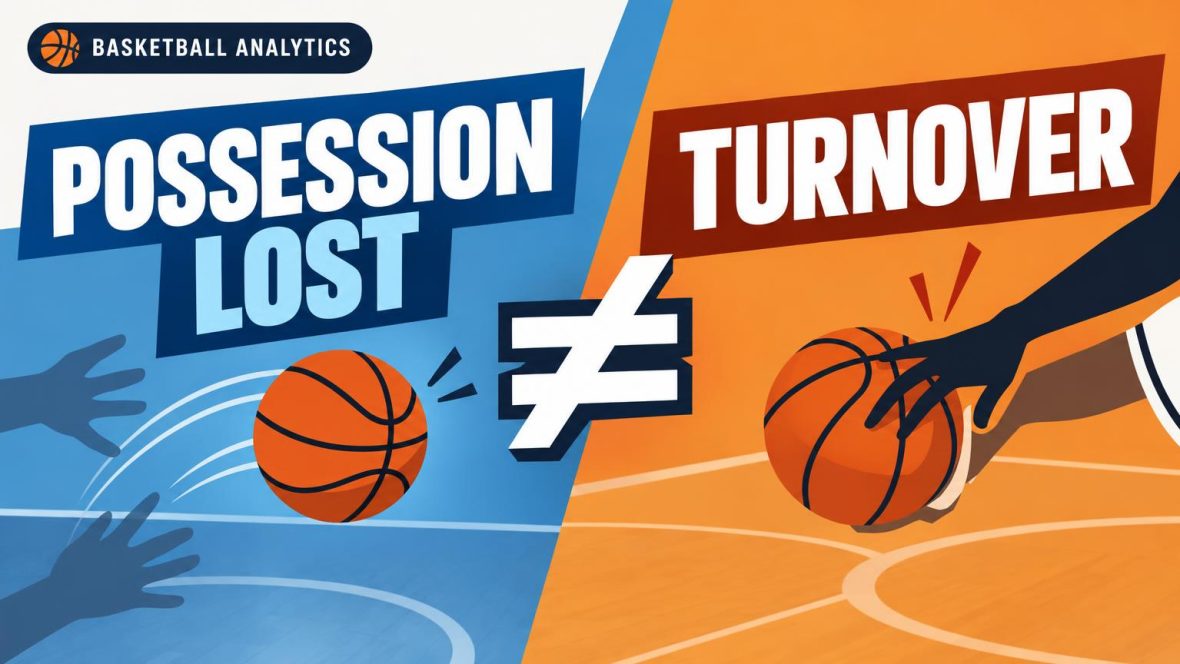
An adventurous winger can look careless on one stat sheet and composed on another.
After a lively 90 minutes, a winger’s match page shows 19 possessions lost. Another dashboard records four turnovers. The first figure sounds like a player who kept giving the ball away; the second suggests only a handful of mistakes. That difference could sway a match rating, especially for a player asked to take on defenders and send crosses into the box.
Top Free Bets for November
BetUS
200% up to $1,000
18+. Full T&C's apply. Sports bonus: 100% match up to $500. Casino bonus: 100% match up to $500. Enter promo code NEW200 at deposit and get up to a $1000 bonus. Valid on your first three (3) deposits. Available for all deposit methods. Minimum deposit of $50.
18+. Full terms apply. The Bet Back Bonus is available for new customers on first-time deposits of $50 or more. To redeem, select the offer in the cashier while completing your first deposit. Make your pick(s) in the Sportsbook and then select ‘Opt In to Use Your Bonus’. A Bet Back Bonus pop-up will display, select ‘Claim’ and then enter the risk amount to place your bet. If it wins, you keep your profits. If it loses, get 100% of your risk refunded as Free Play with only 1-time rollover. Free Play can then be used to place bets in the Sportsbook and earn cash. Additional T&Cs apply, please visit MyBookie to access the Help Center or contact Live Chat for more details.
18+. Full T&C's apply. This promotion is available only to new accounts in North America. Freeplay amount must be wagered five times (5x rollover) before it becomes eligible for withdrawal. Only prematch (sportsbook) bets count toward the 5x rollover requirement. Each person may claim only one bonus. If a customer creates multiple accounts to exploit this promotion, bet105 will mark all related accounts as ineligible and reclaim the funds. If a client receives more than two free bets without making a deposit, any winnings from those bets will be forfeited. This promotion applies only to the initial deposit or if specifically assigned by bet105.
18+. Full terms apply. New BUSR members only. Minimum deposit of $50 required per qualifying deposits. Codes 300SB1, 300SB2, and 300SB3 must be entered at the time of each corresponding deposit.
Each code is valid one time only. Each bonus code must be claimed at least 24 hours apart. Only one promo code may be applied per deposit. A 20x rollover requirement applies to the combined total of your initial deposit and bonus before any withdrawal can be made. Redeemable in the Sportsbook only. BUSR management reserves the right to modify, suspend, or cancel this promotion at any time. Redeem each promo code in the cashier to get your bonus. Must be 18 or older. Please gamble responsibly. General House Rules Apply.
18+. Full terms apply. 100% up to $500 Bonus. Valid for non-crypto payment methods only. Minimum deposit amount $50. This offer is not available to customers from Canada or Mexico. The bonus code must be redeemed immediately after the deposit and before a wager has been placed. The sum of the deposit and the bonus are subject to rollover requirements of 12x at min. odds of -200 (1.5) before a new code can be redeemed. Max. $500 of each bet count towards the rollover requirements. Only bets placed on options that take place count towards the rollover requirements. Wagers on Horse Racing and Boosted Odds do not count towards the rollover requirements. All general Everygame Sportsbook rules apply.
21+. Full T&C's apply. Bonus: 35% of qualifying deposit, up to $105. Rollover: 8× (only sports action counts towards the rollover) deposit + bonus. Expiry: 7 days after credit. Hold period: 2 weeks. Payouts allowed only after rollover and hold period are completed. Example: Deposit $200 → Receive $50 Sports Free Play. Sports Free Play Rules: see the BetAnything General Reward Rules for eligible sports, wager types, odds, and rollover rules.
18+. Full T&C's apply. This bonus can only be redeemed on your first deposit. Rollover is 5x Sports/5x Horses/30x Casino on both the initial deposit and the bonus amount. Rollover in our Sportsbook, for winning wagers, will be determined by the lesser of your risk or win amount at the time of wager settlement; for losing wagers your risk amount will be credited to your rollover contribution. Bonus funds cannot be used for play on Live Dealer games. Live Dealer play does not count toward meeting Casino rollover requirements for withdrawal. If a withdrawal is made before the bonus terms are met, all bonus funds as well as any money earned by wagering the bonus will be forfeited.
The gap is not necessarily a data error. A failed cross, a heavy touch and a tackle during a dribble might not receive the same labels in both datasets. Without knowing what each source counts, neither total shows whether the winger squandered safe passes or lost the ball while attempting something difficult. The numbers describe the same performance, but they may not be measuring the same actions.
Key terms
What each number counts
Possession lost
A potentially broad player-level count of actions after which the player no longer has the ball. Depending on the provider, it may include misplaced passes, failed dribbles and poor touches—not just times an opponent takes control.
Turnover
An event associated with a change of control to the opposition. Providers differ on which changes qualify and whether the event is credited to a particular player.
Failed pass
A pass that does not reach a teammate may add to a player’s possessions lost. It need not count as a turnover if, for example, a teammate recovers the ball.
Counting rule
The criteria a data provider uses to turn match events into a statistic. The same label on two dashboards does not guarantee the same rule; a guide to football possession statistics can help place either figure in context.
A constructed sequence
Four moments, two possible counts
Consider four invented attacks by the same winger. They are not taken from a match feed; each ends with a different question about what, exactly, was lost.
Intercepted pass: The winger tries to thread a forward pass to a striker. A defender steps into its path, controls the ball, and passes to a teammate. The winger’s action fails, and the opposition gains control.
Heavy touch: On the next attack, the winger pushes the ball too far ahead. A nearby teammate reaches it before any defender and keeps the attack moving. The winger has lost control of the ball, but the team has not.
Stopped dribble: Later, the winger attempts to beat a full-back. The defender tackles, gathers the ball, and carries it away. This time the failed individual action also ends the team’s spell on the ball.
Cross out of play: Finally, the winger’s cross sails beyond everyone and over the goal line without a touch. The referee awards a goal kick. No defender has won the ball in open play, but the opposition gets the restart.
The sequence gives four failed actions, yet only two clear open-play changes of control. The heavy touch and goal kick show why that distinction matters when comparing the two numbers.
Where the two counts split
For this illustration, each failed pass, unsuccessful touch, or dispossession counts as one player possession lost. A team turnover requires the opponent to gain control while the ball is still in play. Those rules are fixed for the example; they are not a claim about how every data provider records a match.
Winger’s action
Player loss
Team turnover
What happens next
A short pass misses its target
1
0
A teammate collects the loose ball before an opponent reaches it.
A heavy touch sends the ball away
1
1
An opponent takes control in open play.
A defender takes the ball from the winger
1
1
The defender carries it away.
A cross runs over the goal line
1
0
Play stops for a goal kick.
Total
4
2
The missed pass still costs the winger a successful action under these rules, but the teammate’s recovery keeps possession with the same side. The cross also counts as a failed action; it cannot meet this example’s turnover test because the ball has gone out of play. Only the heavy touch and the dispossession produce live-ball changes to opponent control.
Check the provider’s definitions
The four-to-two split depends on the stated rules. A real provider may classify a teammate-recovered pass differently, count an out-of-play cross under another turnover definition, or assign the loss to a different event. Compare figures only after checking what each metric includes.
The pass result is not the turnover
An intercepted pass and a cross that sails out of play look alike in one column: neither reaches its intended teammate. Their next moments differ. When a defender intercepts the pass and controls the ball, the winger’s team has lost control in open play. Under the rules used for this example, that is a turnover.
The cross also ends the attack, and the opponents may receive a goal kick. But the ball goes out before anyone on the other team controls it. This example counts the cross as a lost possession, not as a turnover. A data provider may treat the restart differently, which is why its definitions matter.
There is a third possibility between those two outcomes. A winger may aim a pass at the striker, miss, and watch a midfielder from the same team collect it. The intended pass failed, but the team kept the ball, so no turnover occurred under these rules.
Pass completion answers whether a pass reached its target; turnover requires a separate judgment about control. Even a completed pass says little about what happened after the receiver got it. To check a disputed count, the useful question is who controlled the ball next—not merely whether the pass was marked complete.
A loose touch is not a tackle
The winger’s heavy touch rolls beyond reach, but a teammate gets to the ball first. In ordinary football terms, the winger miscontrolled it: the ball got away without a defender taking it. That may count as an individual possession lost even though the team kept the ball. Whether it appears in a provider’s event data depends on how that provider treats the teammate’s recovery.
The stopped dribble tells a different story. The winger tries to carry the ball past a defender, who challenges and wins it. That is dispossession: an opponent has taken the ball from the player. If the defender merely knocks it loose and the winger’s teammate collects it, however, the outcome is less straightforward than “tackle equals turnover.”
Before comparing totals, the event rules need two checks: Does a teammate’s recovery still count as possession lost for the winger? And what must a defensive challenge achieve to count as a dispossession or turnover? Those answers determine whether the two moments widen the gap between the numbers or appear in both.
Who actually gained control?
The four winger actions look different when each is checked for player control, team control, and opponent control while the ball is live. Losing the ball personally is not always the same as handing possession to the other side.
Winger action
Player control
Team control
Opponent control in play
Pass intercepted
Lost
Lost
Yes
Loose ball recovered by a teammate
Lost
Kept
No
Cross goes out for a goal kick
Lost
Ends at the whistle
No
Defender wins the ball during a dribble
Lost
Lost
Yes
The teammate recovery is the clearest split: the winger’s action fails, but the side still has the ball. The cross also fails, and the opponent gets the next restart. That is not the same event as an opponent taking control while play continues; a goal kick awards a restart after the ball has gone out.
The interception and the defender’s win are the two live-ball changes of control in this example. Either might launch a dangerous counterattack or end with an immediate recovery by the winger’s team. Those transitions after a turnover matter when assessing the cost of the mistake, but they do not change whether the opponent took control at that moment. The practical check is the next touch before play stops, not merely which team restarts it.
The same total, different risks
Two wingers can each register 19 possessions lost and leave different footage behind. One tries to slip passes behind a compact back line; the other lets a routine reception run under a foot. Both actions may add one to the same column, but the first might create a shooting chance, while the second might invite a counterattack.
Location changes the stakes. A failed through ball near the opponent’s penalty area usually leaves defenders some distance to cover before they can threaten goal. A loose touch in front of the player’s own box can produce an immediate shot. Pressure matters too: a pass attempted with two defenders closing is different from a mishit ball with time to choose.
The next few seconds matter as well. A teammate who collects a deflected pass may keep the attack alive; even if an opponent gathers it, a quick recovery can limit the damage. Neither outcome necessarily removes the failed action from a provider’s tally. Pass ambition also needs care: definitions of progressive passes vary across providers, so that label cannot be assumed from the loss alone.
The total points to actions worth reviewing, not their cost or the winger’s overall value.
Checklist
Check the events before comparing totals
Name the data provider
Record the provider and dataset version, if available. When using downloadable possession data, check that both figures come from the same source and match, not separate sites with similar-looking labels.
Read the event definitions
Find what qualifies as a possession lost or turnover. Check whether failed passes, miscontrols, dispossessions and intercepted crosses are counted separately or folded into a broader total.
Confirm whose count it is
A player can lose the ball while a teammate recovers it. Check whether the figure describes the winger’s actions or a change in team possession before treating those as equivalent.
Inspect the awkward endings
Look for passes that go out of play, shots that end an attack and loose balls recovered by teammates. Note whether the provider counts a restart as a turnover or requires an opponent to gain live-ball control.
Test a few clips first
Pick several timestamped events behind the figures and compare their tags with the footage. If those examples fit the definitions, then reconcile the full-match totals; if not, investigate the tagging before drawing conclusions.
Conclusion
What the winger’s numbers can tell
The winger’s 19 possessions lost and four turnovers can both be accurate. One figure may count unsuccessful actions; the other may count only events that meet a provider’s turnover rules. Neither number, on its own, says how often the opposition gained control or how much danger followed.
Before judging the performance, name the data provider and check its definitions. Then look at whether an opponent actually controlled the ball, where the event happened, and what came next. A failed cross that ends in a goal kick carries a different risk from a loose touch near the winger’s own box. That context matters especially when considering how lost possession contributes to defeats: the totals alone cannot establish the winger’s share of the blame.
Top Free Bets for November
BetUS
200% up to $1,000
18+. Full T&C's apply. Sports bonus: 100% match up to $500. Casino bonus: 100% match up to $500. Enter promo code NEW200 at deposit and get up to a $1000 bonus. Valid on your first three (3) deposits. Available for all deposit methods. Minimum deposit of $50.
18+. Full terms apply. The Bet Back Bonus is available for new customers on first-time deposits of $50 or more. To redeem, select the offer in the cashier while completing your first deposit. Make your pick(s) in the Sportsbook and then select ‘Opt In to Use Your Bonus’. A Bet Back Bonus pop-up will display, select ‘Claim’ and then enter the risk amount to place your bet. If it wins, you keep your profits. If it loses, get 100% of your risk refunded as Free Play with only 1-time rollover. Free Play can then be used to place bets in the Sportsbook and earn cash. Additional T&Cs apply, please visit MyBookie to access the Help Center or contact Live Chat for more details.
18+. Full T&C's apply. This promotion is available only to new accounts in North America. Freeplay amount must be wagered five times (5x rollover) before it becomes eligible for withdrawal. Only prematch (sportsbook) bets count toward the 5x rollover requirement. Each person may claim only one bonus. If a customer creates multiple accounts to exploit this promotion, bet105 will mark all related accounts as ineligible and reclaim the funds. If a client receives more than two free bets without making a deposit, any winnings from those bets will be forfeited. This promotion applies only to the initial deposit or if specifically assigned by bet105.
18+. Full terms apply. New BUSR members only. Minimum deposit of $50 required per qualifying deposits. Codes 300SB1, 300SB2, and 300SB3 must be entered at the time of each corresponding deposit.
Each code is valid one time only. Each bonus code must be claimed at least 24 hours apart. Only one promo code may be applied per deposit. A 20x rollover requirement applies to the combined total of your initial deposit and bonus before any withdrawal can be made. Redeemable in the Sportsbook only. BUSR management reserves the right to modify, suspend, or cancel this promotion at any time. Redeem each promo code in the cashier to get your bonus. Must be 18 or older. Please gamble responsibly. General House Rules Apply.
18+. Full terms apply. 100% up to $500 Bonus. Valid for non-crypto payment methods only. Minimum deposit amount $50. This offer is not available to customers from Canada or Mexico. The bonus code must be redeemed immediately after the deposit and before a wager has been placed. The sum of the deposit and the bonus are subject to rollover requirements of 12x at min. odds of -200 (1.5) before a new code can be redeemed. Max. $500 of each bet count towards the rollover requirements. Only bets placed on options that take place count towards the rollover requirements. Wagers on Horse Racing and Boosted Odds do not count towards the rollover requirements. All general Everygame Sportsbook rules apply.
21+. Full T&C's apply. Bonus: 35% of qualifying deposit, up to $105. Rollover: 8× (only sports action counts towards the rollover) deposit + bonus. Expiry: 7 days after credit. Hold period: 2 weeks. Payouts allowed only after rollover and hold period are completed. Example: Deposit $200 → Receive $50 Sports Free Play. Sports Free Play Rules: see the BetAnything General Reward Rules for eligible sports, wager types, odds, and rollover rules.
18+. Full T&C's apply. This bonus can only be redeemed on your first deposit. Rollover is 5x Sports/5x Horses/30x Casino on both the initial deposit and the bonus amount. Rollover in our Sportsbook, for winning wagers, will be determined by the lesser of your risk or win amount at the time of wager settlement; for losing wagers your risk amount will be credited to your rollover contribution. Bonus funds cannot be used for play on Live Dealer games. Live Dealer play does not count toward meeting Casino rollover requirements for withdrawal. If a withdrawal is made before the bonus terms are met, all bonus funds as well as any money earned by wagering the bonus will be forfeited.
Hi I'm Andy and I love to report on the latest football scores and Tables. I also like to have a bet on the football and occasionaly on the horses. On this website I have new bookmaker offers listed that will give you free bets and bonuses to help you beat the bookies. Enjoy your stay.