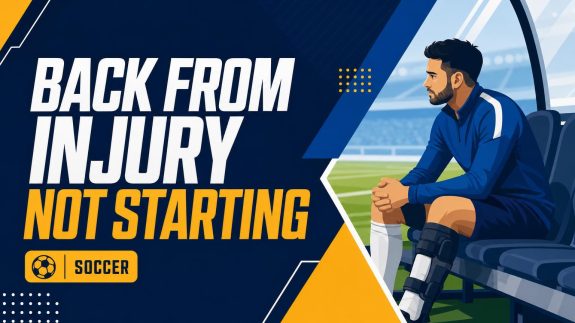
“Late fitness test” sounds decisive; in practice, it often means the decision remains finely balanced.
The player joins part of Friday’s session, travels with the squad, and appears in the club’s matchday photos. By Saturday morning, there is still no reliable answer. None of those signs guarantees involvement. Partial training may avoid sprinting or contact, while travelling can simply keep selection options open.
Top Free Bets for October
BetUS
200% up to $1,000
18+. Full T&C's apply. Sports bonus: 100% match up to $500. Casino bonus: 100% match up to $500. Enter promo code NEW200 at deposit and get up to a $1000 bonus. Valid on your first three (3) deposits. Available for all deposit methods. Minimum deposit of $50.
18+. Full terms apply. The Bet Back Bonus is available for new customers on first-time deposits of $50 or more. To redeem, select the offer in the cashier while completing your first deposit. Make your pick(s) in the Sportsbook and then select ‘Opt In to Use Your Bonus’. A Bet Back Bonus pop-up will display, select ‘Claim’ and then enter the risk amount to place your bet. If it wins, you keep your profits. If it loses, get 100% of your risk refunded as Free Play with only 1-time rollover. Free Play can then be used to place bets in the Sportsbook and earn cash. Additional T&Cs apply, please visit MyBookie to access the Help Center or contact Live Chat for more details.
18+. Full T&C's apply. This promotion is available only to new accounts in North America. Freeplay amount must be wagered five times (5x rollover) before it becomes eligible for withdrawal. Only prematch (sportsbook) bets count toward the 5x rollover requirement. Each person may claim only one bonus. If a customer creates multiple accounts to exploit this promotion, bet105 will mark all related accounts as ineligible and reclaim the funds. If a client receives more than two free bets without making a deposit, any winnings from those bets will be forfeited. This promotion applies only to the initial deposit or if specifically assigned by bet105.
18+. Full terms apply. New BUSR members only. Minimum deposit of $50 required per qualifying deposits. Codes 300SB1, 300SB2, and 300SB3 must be entered at the time of each corresponding deposit.
Each code is valid one time only. Each bonus code must be claimed at least 24 hours apart. Only one promo code may be applied per deposit. A 20x rollover requirement applies to the combined total of your initial deposit and bonus before any withdrawal can be made. Redeemable in the Sportsbook only. BUSR management reserves the right to modify, suspend, or cancel this promotion at any time. Redeem each promo code in the cashier to get your bonus. Must be 18 or older. Please gamble responsibly. General House Rules Apply.
18+. Full terms apply. 100% up to $500 Bonus. Valid for non-crypto payment methods only. Minimum deposit amount $50. This offer is not available to customers from Canada or Mexico. The bonus code must be redeemed immediately after the deposit and before a wager has been placed. The sum of the deposit and the bonus are subject to rollover requirements of 12x at min. odds of -200 (1.5) before a new code can be redeemed. Max. $500 of each bet count towards the rollover requirements. Only bets placed on options that take place count towards the rollover requirements. Wagers on Horse Racing and Boosted Odds do not count towards the rollover requirements. All general Everygame Sportsbook rules apply.
21+. Full T&C's apply. Bonus: 35% of qualifying deposit, up to $105. Rollover: 8× (only sports action counts towards the rollover) deposit + bonus. Expiry: 7 days after credit. Hold period: 2 weeks. Payouts allowed only after rollover and hold period are completed. Example: Deposit $200 → Receive $50 Sports Free Play. Sports Free Play Rules: see the BetAnything General Reward Rules for eligible sports, wager types, odds, and rollover rules.
18+. Full T&C's apply. This bonus can only be redeemed on your first deposit. Rollover is 5x Sports/5x Horses/30x Casino on both the initial deposit and the bonus amount. Rollover in our Sportsbook, for winning wagers, will be determined by the lesser of your risk or win amount at the time of wager settlement; for losing wagers your risk amount will be credited to your rollover contribution. Bonus funds cannot be used for play on Live Dealer games. Live Dealer play does not count toward meeting Casino rollover requirements for withdrawal. If a withdrawal is made before the bonus terms are met, all bonus funds as well as any money earned by wagering the bonus will be forfeited.
The test itself is rarely a neat pass-or-fail exam. Medical staff may assess pain, movement, strength, acceleration, turning, or the reaction to a short warm-up. Even if the injury holds up, the manager must still judge whether starting, appearing from the bench, or sitting out is worth the risk. That call may be made only shortly before the team sheet is submitted—and sometimes the player’s response during the warm-up changes it again.
Key terms
What a “late fitness test” actually means
Late fitness test
An informal name for a near-match assessment of whether a player can participate safely and perform effectively. It is not one standardized medical test used across football.
What gets tested
Staff may check pain, movement, strength, speed, changes of direction, kicking, or reactions to contact. The exercises reflect the injury and the demands of the player’s position.
Clearance threshold
The acceptable result varies by player, injury, match importance, and club policy. Passing may mean starting, being available from the bench, or playing with restricted minutes.
A 12-to-48-hour delay can turn a snapshot into a trend. Pain may settle at rest yet return after loading; swelling can increase overnight; fatigue or illness symptoms may either lift or become clearer. Repeating the same movements and clinical checks gives staff something more useful than a single good—or bad—session.
Time also reveals whether treatment has genuinely helped. Anti-inflammatory medication, physiotherapy, sleep, and reduced training can improve comfort, but the key question is whether that improvement survives jogging, turning, contact, and recovery afterward. Staff may therefore test once, monitor the reaction for several hours, then test again.
This is why expected return dates can change. A provisional date is based on expected healing; the body’s response to each increase in load supplies newer evidence. Waiting usually signals that the outcome remains finely balanced, not that a setback is being hidden.
The hours after testing count
The reaction after a test can matter as much as the session itself. Increased pain, stiffness, swelling, or unusual fatigue later that day may turn an apparent pass into a no-go decision.
Inside the assessment
How medical staff build a match-readiness picture
01
Review the symptoms
Staff check pain, stiffness, swelling and confidence in the injured area. They also ask how it reacted to training, treatment and the previous day’s loading.
02
Examine the injury
The clinician assesses movement, tenderness, strength and stability, comparing the injured side with the unaffected side where useful.
03
Test basic function
Jogging, accelerating, braking or hopping can show whether ordinary athletic movement is medically tolerable. Passing these checks does not automatically mean the player is match-ready.
04
Add football-specific demands
The test then becomes position-specific: repeated sprints and cuts for a winger, jumping and duelling for a defender, or diving and kicking for a goalkeeper. Speed, force and repetition matter—not merely completing one movement.
05
Check the response
Staff watch for worsening pain, altered movement, swelling or fatigue during the session and shortly afterward. A delayed reaction can change the decision or reduce the planned role.
Basic capacity means the injury tolerates selected movements; match readiness means it can withstand repeated, unpredictable actions at competitive intensity.
Shared judgment
Who makes the final call?
Medical clearance and team selection answer different questions.
A late decision is rarely based on one person’s verdict. Medical staff assess the injury, symptoms and likely consequences of aggravation; they may rule participation unsafe. Sports scientists compare movement, speed and repeated-effort data with the player’s normal levels, while the player reports pain, stiffness, confidence and reactions that equipment cannot fully capture.
The coach then considers whether an available player is useful in the planned role. That calculation can change substantially between a 15-minute substitute appearance and a full match involving repeated sprints, tackles or sharp changes of direction.
The main questions usually include:
Is the current pain manageable, stable and unlikely to alter movement?
How high is the recurrence risk under match intensity?
Could aggravation turn a short absence into several weeks?
How many minutes are realistically expected?
Are suitable alternatives available?
Does the match’s importance justify accepting a slightly higher—but still medically acceptable—risk?
These factors explain why physical clearance does not guarantee selection. A player may be medically available but lack enough conditioning, sharpness or confidence to start. Conversely, limited clearance may still support a place on the bench if the coach sees value in a short, controlled appearance.
Club procedures vary, but the distinction remains: clinicians judge acceptable health risk; the coach chooses the lineup within those limits.
Decision timeline
How the decision develops before kick-off
Final training
Staff watch whether the player can complete relevant drills at useful intensity, then check for pain, swelling, or altered movement.
Overnight response
The injury may stiffen or flare after loading. That delayed reaction can materially change the assessment.
Match morning
Symptoms and function are checked again. Some calls are effectively settled here; others remain conditional.
Stadium arrival
A short physical check or movement test can provide the last evidence before the selection deadline.
Lineup submission
By the official deadline, the coach must decide whether to start the player, name them as a substitute, or leave them out.
Pre-match warm-up
A player already selected can still develop pain or fail a movement test during warm-up. This is a new late problem, not an unresolved pre-deadline decision.
Exact submission and replacement rules vary by competition.
Availability levels
Selected does not always mean fully fit
Starting role
A player who starts may have cleared every required test, but still be operating under a minutes cap or a plan for early reassessment.
Managed involvement
A substitute can be fit for limited minutes without being ready for a full match. Bench duty may also mean emergency cover: the player enters only if the game leaves no better option.
Precautionary omission
Leaving the player out can be precautionary rather than proof of a major setback. This is especially important when interpreting what “doubtful” means in team news: uncertainty often reflects timing, not severity.
Rehabilitation return
If testing reproduces symptoms or the player reacts badly afterward, the next step may be more rehabilitation. That outcome suggests readiness was overestimated, but does not by itself reveal a new or serious injury.
The team sheet shows selection status, not the full medical assessment.
Myth vs fact
Signals that are easy to overread
Misleading
A reported 70% chance means the player is almost medically cleared.
A precise number can rest on imprecise evidence.
False
Travelling with the squad proves the player will be involved.
Presence at the hotel is not presence on the team sheet.
Not enough
Completing training means the player is fully fit.
Participation is encouraging, but the likely role and minutes remain unresolved.
Still fluid
A promised matchday decision guarantees a clear answer that morning.
A genuine update can become outdated within hours.
Step List
Check when the report was published
A “late test” reported two days before the match may describe an early plan, not the current position. Prioritize the newest credible update and note whether the coach spoke before or after final training.
Identify the stated problem
Look for the affected area, any recurrence, and whether the concern is pain, movement, contact, or fatigue. Vague phrases such as “a knock” reveal less than a specific training update.
Look for full-training evidence
Partial or individual work is weaker evidence than completing the main session with normal drills and contact. Consecutive full sessions are more reassuring, although they do not guarantee a start.
Match the evidence to the deadline
Fantasy deadlines may close before official teams appear. For wagering, the choice between betting before team news or waiting for confirmed lineups changes how much uncertainty must be priced in.
Decide whether action can wait
If the relevant market or game remains open, confirmed lineups usually outweigh speculation. If action is required earlier, allow for a substitute role, restricted minutes, or complete omission rather than treating availability as binary.
Official team sheets settle selection, not necessarily match participation: discomfort during the warm-up can still force a late change.
Final check
Treat the deadline as the real decision point
The assessment is usually resolved before the team is submitted, but outside decisions may be due sooner. The safest reading combines the latest report, the injury detail, evidence of full training, and the timing of confirmed lineups.
Even after submission, circumstances can change. Selection indicates intent—not certainty of starting, completing the warm-up, or playing unrestricted minutes.
Top Free Bets for October
BetUS
200% up to $1,000
18+. Full T&C's apply. Sports bonus: 100% match up to $500. Casino bonus: 100% match up to $500. Enter promo code NEW200 at deposit and get up to a $1000 bonus. Valid on your first three (3) deposits. Available for all deposit methods. Minimum deposit of $50.
18+. Full terms apply. The Bet Back Bonus is available for new customers on first-time deposits of $50 or more. To redeem, select the offer in the cashier while completing your first deposit. Make your pick(s) in the Sportsbook and then select ‘Opt In to Use Your Bonus’. A Bet Back Bonus pop-up will display, select ‘Claim’ and then enter the risk amount to place your bet. If it wins, you keep your profits. If it loses, get 100% of your risk refunded as Free Play with only 1-time rollover. Free Play can then be used to place bets in the Sportsbook and earn cash. Additional T&Cs apply, please visit MyBookie to access the Help Center or contact Live Chat for more details.
18+. Full T&C's apply. This promotion is available only to new accounts in North America. Freeplay amount must be wagered five times (5x rollover) before it becomes eligible for withdrawal. Only prematch (sportsbook) bets count toward the 5x rollover requirement. Each person may claim only one bonus. If a customer creates multiple accounts to exploit this promotion, bet105 will mark all related accounts as ineligible and reclaim the funds. If a client receives more than two free bets without making a deposit, any winnings from those bets will be forfeited. This promotion applies only to the initial deposit or if specifically assigned by bet105.
18+. Full terms apply. New BUSR members only. Minimum deposit of $50 required per qualifying deposits. Codes 300SB1, 300SB2, and 300SB3 must be entered at the time of each corresponding deposit.
Each code is valid one time only. Each bonus code must be claimed at least 24 hours apart. Only one promo code may be applied per deposit. A 20x rollover requirement applies to the combined total of your initial deposit and bonus before any withdrawal can be made. Redeemable in the Sportsbook only. BUSR management reserves the right to modify, suspend, or cancel this promotion at any time. Redeem each promo code in the cashier to get your bonus. Must be 18 or older. Please gamble responsibly. General House Rules Apply.
18+. Full terms apply. 100% up to $500 Bonus. Valid for non-crypto payment methods only. Minimum deposit amount $50. This offer is not available to customers from Canada or Mexico. The bonus code must be redeemed immediately after the deposit and before a wager has been placed. The sum of the deposit and the bonus are subject to rollover requirements of 12x at min. odds of -200 (1.5) before a new code can be redeemed. Max. $500 of each bet count towards the rollover requirements. Only bets placed on options that take place count towards the rollover requirements. Wagers on Horse Racing and Boosted Odds do not count towards the rollover requirements. All general Everygame Sportsbook rules apply.
21+. Full T&C's apply. Bonus: 35% of qualifying deposit, up to $105. Rollover: 8× (only sports action counts towards the rollover) deposit + bonus. Expiry: 7 days after credit. Hold period: 2 weeks. Payouts allowed only after rollover and hold period are completed. Example: Deposit $200 → Receive $50 Sports Free Play. Sports Free Play Rules: see the BetAnything General Reward Rules for eligible sports, wager types, odds, and rollover rules.
18+. Full T&C's apply. This bonus can only be redeemed on your first deposit. Rollover is 5x Sports/5x Horses/30x Casino on both the initial deposit and the bonus amount. Rollover in our Sportsbook, for winning wagers, will be determined by the lesser of your risk or win amount at the time of wager settlement; for losing wagers your risk amount will be credited to your rollover contribution. Bonus funds cannot be used for play on Live Dealer games. Live Dealer play does not count toward meeting Casino rollover requirements for withdrawal. If a withdrawal is made before the bonus terms are met, all bonus funds as well as any money earned by wagering the bonus will be forfeited.
Hi I'm Andy and I love to report on the latest football scores and Tables. I also like to have a bet on the football and occasionaly on the horses. On this website I have new bookmaker offers listed that will give you free bets and bonuses to help you beat the bookies. Enjoy your stay.