

BetOnline
$250 + 100 Free Spins
18+. Full T&C's apply.



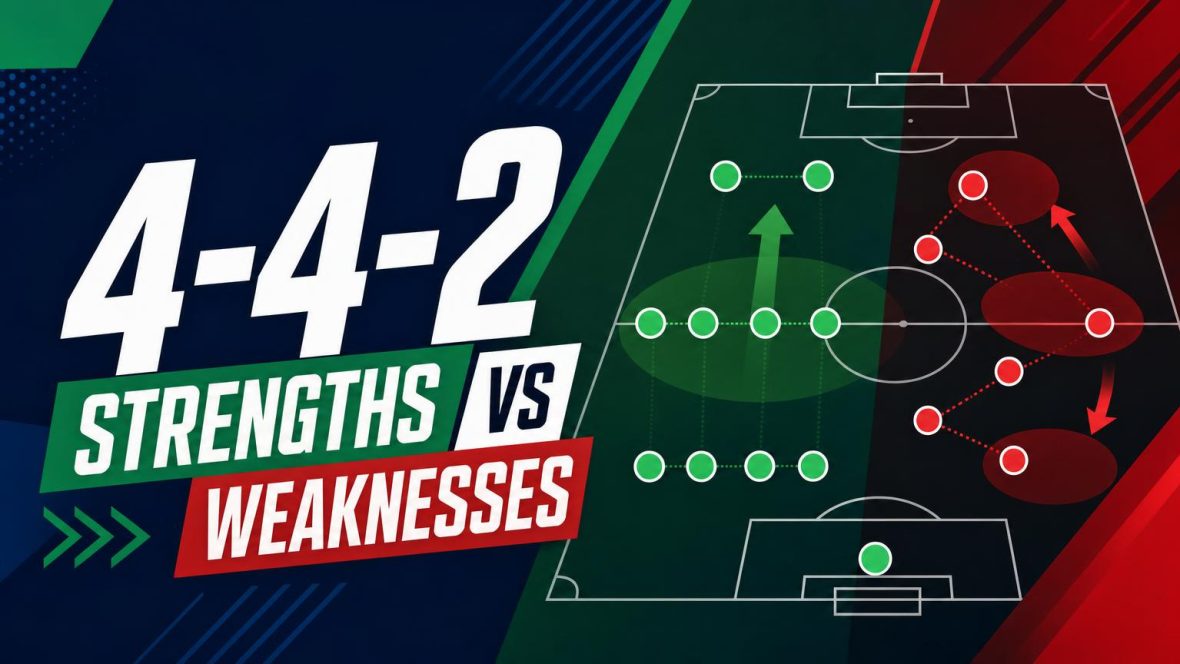
The 4-4-2 is simple to recognise—but increasingly difficult to keep intact.
A routine buildup can expose the central problem within seconds. The two 4-4-2 midfielders step forward, an opposing full-back slips inside, and suddenly they are chasing a three-against-two. If the ball goes wide, an aggressive press can pin the full-back while runners attack the gap behind the winger.




Yet the shape still offers clear reference points, natural width, and two forwards ready to counter or press centre-backs. Its success is less about being old-fashioned than keeping the lines compact, moving together, and knowing when one striker should drop or a wide midfielder should narrow. Small adaptations can preserve the familiar balance; poor spacing makes it unravel quickly.
4-4-2 is best read as a starting reference, not a screenshot that remains unchanged. The label describes where players broadly begin and how they may defend, while a wider guide to formations and tactical trade-offs places those choices alongside other systems.
When a full-back advances, the wide midfielder can move inside to support central possession. That may create a temporary 3-2-5 or 2-3-5 in attack, depending on what the opposite full-back does. If both full-backs stay cautious, the side retains a clearer back four but offers less width high up the pitch.
A striker can also drop between the lines, turning the front pair into something closer to a number 10 behind one forward. This supplies a short passing option and may draw out a centre-back, although it leaves fewer runners threatening the box.
Without the ball, wide midfielders usually recover beside the central pair to restore two compact banks of four. The practical question is therefore not simply whether a team “plays 4-4-2,” but who leaves the base shape, when they move, and who covers the space.
A 4-4-2 side may see less of the ball yet still influence where the match is played. Compact spacing can deny central passes, invite predictable circulation outside, and create direct counterattacking routes.
The shape becomes vulnerable when those distances stretch. Its strength comes less from the formation on paper than from players moving together and understanding who presses, covers, and provides the next pass.
A basic 4-4-2 places only two central midfielders against systems using a midfield three, an inverted full-back, or a striker dropping between the lines. That numerical disadvantage is an inherent tradeoff: protecting the centre often requires a striker or wide midfielder to narrow inside, which concedes easier possession elsewhere.
Coordination determines whether these pressures become decisive. One player pressing alone stretches the block; a full-back advancing without cover exposes the channel; both strikers staying high can leave midfield outnumbered.
The formation cannot remove every overload without surrendering width or counterattacking presence. It can, however, avoid making those compromises worse through short distances, clear pressing cues, and synchronized shifts across the pitch.
A 4-3-3 usually gives its centre-backs a spare passing option against two strikers, while its midfield three can outnumber the 4-4-2’s central pair. The trade-off is clear: 4-4-2 can threaten both centre-backs immediately, but may lose control behind that first press.
The two forwards should not simply charge straight ahead. One can press the ball-carrying centre-back from an angle that blocks the pass into the holding midfielder; the other stays close enough to discourage a switch across the back line. This curved approach is central to understanding how a 4-3-3 builds and circulates possession.
If the pressing angle is poor, the pivot receives freely and turns into the midfield overload. If it is correct, play is steered toward a full-back, where the touchline narrows the available options.
Once the ball travels wide, the 4-4-2 wide midfielder faces an awkward choice:
The safest response is coordinated movement rather than one player covering both threats. As the wide midfielder presses outward, the central pair slides across and the far-side midfielder narrows. Done quickly, this preserves compactness; done late, it opens either the flank or the centre.
Against a 4-2-3-1, the central problem is often the No. 10 receiving behind the two central midfielders. If a centre-back steps forward, space opens for the lone striker or an inside-running winger. If a midfielder tracks back, the opponent’s double pivot gains time to circulate possession.
The safer answer is to compress the gap between midfield and defence. That denies clean turns, but it can push the 4-4-2 deeper and leave more room for full-backs outside. The wide midfielders then face longer recovery runs, especially after switches of play.
Another option is to alter one striker’s role, creating something closer to a 4-4-1-1 without the ball. The dropping striker can screen a pivot, block passes into the No. 10, or briefly follow that player into midfield. The cost is clear: fewer immediate outlets when possession is won.
A workable compromise keeps these duties situational:
The aim is not complete denial, but making the No. 10 receive facing away from goal.
Against a 3-5-2, the first problem is numerical: three centre-backs can circulate around two strikers, leaving one defender free. Stepping a midfielder forward may remove that spare player, but it also opens space behind the midfield line. This is central to any attempt to compare 4-4-2 with a 3-5-2.
The pressure spreads elsewhere. Wing-backs can pin the wide midfielders deep, while three central midfielders move around the 4-4-2 pair. If the wide midfielders press forward, the wing-backs become available; if they stay back, the outside centre-backs can advance comfortably.
A useful pressing trigger is a pass into an outside centre-back. The near striker can curve the press to block the return pass, the wide midfielder can jump toward the wing-back, and the nearest central midfielder can screen the inside option. Timing matters: a late jump leaves both the wing-back and central midfielder free.
The trade-off is space behind advanced wing-backs. Quick passes into the channel can release a striker or wide midfielder before the back three shifts across. For 4-4-2, the best openings often come from forcing play wide, winning the next pass, and attacking that vacated flank immediately.
Modern 4-4-2 rarely stays perfectly flat. Its useful adaptations change one relationship at a time rather than replacing the whole structure.
Against a dominant pivot or a No. 10, one forward can withdraw into a 4-4-1-1. This adds a central screen and staggers the attack, while the higher striker still occupies the centre-backs. The deeper forward should remain close enough to support counters; dropping beside the central midfielders can leave the outlet isolated.
A 4-2-4 press is usually a temporary pressing picture, not a permanent formation. Wide midfielders jump toward the full-backs while the strikers use curved runs to block passes into midfield. This can force rushed play wide, but only if the back six squeeze forward and preserve compact line distances.
Once possession is regained, staggered support offers safer routes through an opponent’s high press than four players running ahead at once.
Asymmetric movement can address mismatched threats. One full-back may overlap while the opposite full-back stays deeper; one wide midfielder may tuck inside while the other holds width. These selective overlaps create an extra passing option without exposing both channels simultaneously.
The underlying references remain simple: one player advances, a nearby teammate covers, and the lines move together. The shape gains control through timing rather than added complexity.
If several players improvise at once, the adjustment becomes a new problem. Effective variations preserve cover, short support distances, and one clear counterattacking outlet.
Both players need positional discipline, defensive range, and reliable passing under pressure. If neither can protect space alone, the lines must stay especially compact.
They must support full-backs without becoming permanent defenders, then offer an outlet when possession changes.
The pairing works best when their movements complement each other: one can link or press while the other threatens depth.
Against three midfielders or a No. 10, plan who screens, tracks, and steps out. Leaving those decisions improvised makes overloads predictable.
4-4-2 suits direct transitions, crossing, and clear pressing references. It is less comfortable when prolonged central possession is essential.
4-4-2 remains useful when partnerships are strong, distances stay compact, and two forwards offer genuine counterattacking value. It becomes risky when wide recovery is unreliable or central overloads lack a rehearsed response.
The formation is therefore not inherently outdated or secure: its suitability depends on personnel, opponent, and match plan.


A formation such as 4-2-3-1 counts outfield players from defense to attack: four defenders, two…
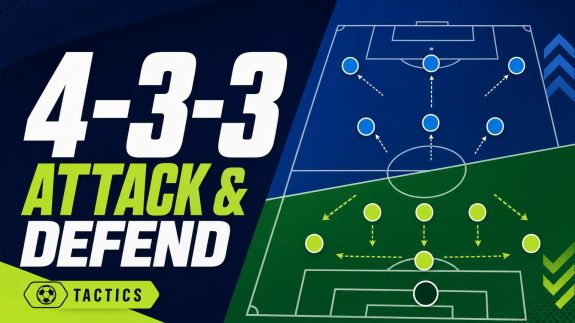
On the teamsheet, a 4-3-3 has four defenders, one holding midfielder, two more advanced central…
