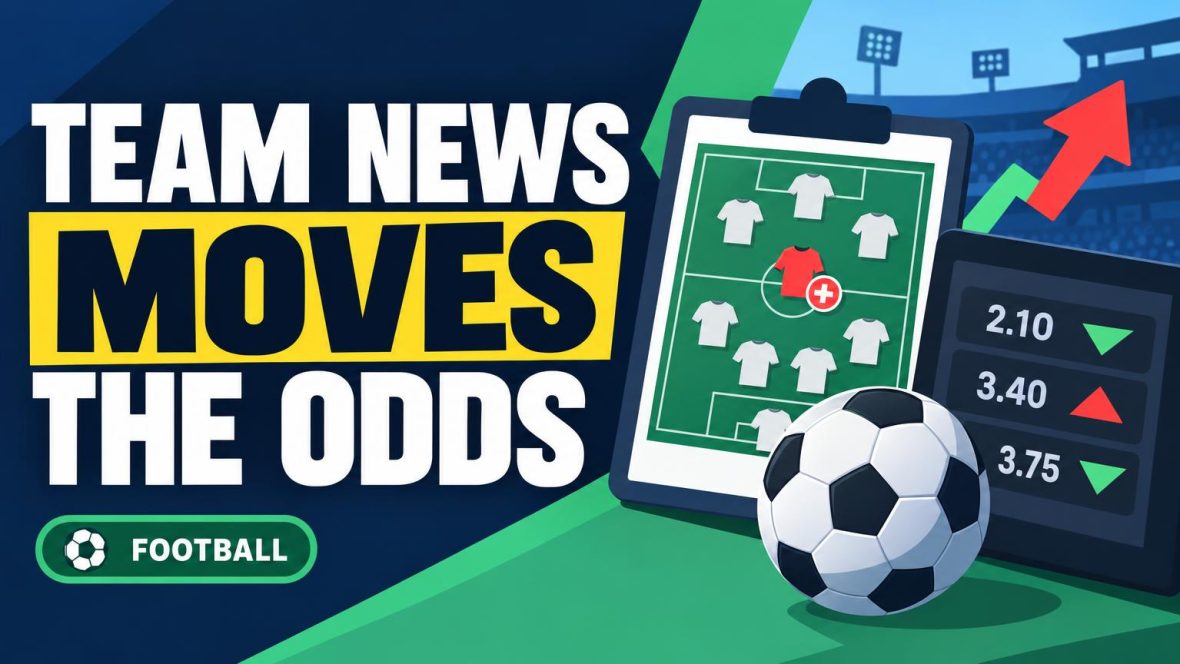
At 6:45 p.m., the starting XI appears and the home win price shortens. The star striker is on the bench. That may seem backwards, but the omission could have been widely expected; a key defender’s return may be the real surprise.
Top Free Bets for November
BetUS
200% up to $1,000
18+. Full T&C's apply. Sports bonus: 100% match up to $500. Casino bonus: 100% match up to $500. Enter promo code NEW200 at deposit and get up to a $1000 bonus. Valid on your first three (3) deposits. Available for all deposit methods. Minimum deposit of $50.
18+. Full terms apply. The Bet Back Bonus is available for new customers on first-time deposits of $50 or more. To redeem, select the offer in the cashier while completing your first deposit. Make your pick(s) in the Sportsbook and then select ‘Opt In to Use Your Bonus’. A Bet Back Bonus pop-up will display, select ‘Claim’ and then enter the risk amount to place your bet. If it wins, you keep your profits. If it loses, get 100% of your risk refunded as Free Play with only 1-time rollover. Free Play can then be used to place bets in the Sportsbook and earn cash. Additional T&Cs apply, please visit MyBookie to access the Help Center or contact Live Chat for more details.
18+. Full T&C's apply. This promotion is available only to new accounts in North America. Freeplay amount must be wagered five times (5x rollover) before it becomes eligible for withdrawal. Only prematch (sportsbook) bets count toward the 5x rollover requirement. Each person may claim only one bonus. If a customer creates multiple accounts to exploit this promotion, bet105 will mark all related accounts as ineligible and reclaim the funds. If a client receives more than two free bets without making a deposit, any winnings from those bets will be forfeited. This promotion applies only to the initial deposit or if specifically assigned by bet105.
18+. Full terms apply. New BUSR members only. Minimum deposit of $50 required per qualifying deposits. Codes 300SB1, 300SB2, and 300SB3 must be entered at the time of each corresponding deposit.
Each code is valid one time only. Each bonus code must be claimed at least 24 hours apart. Only one promo code may be applied per deposit. A 20x rollover requirement applies to the combined total of your initial deposit and bonus before any withdrawal can be made. Redeemable in the Sportsbook only. BUSR management reserves the right to modify, suspend, or cancel this promotion at any time. Redeem each promo code in the cashier to get your bonus. Must be 18 or older. Please gamble responsibly. General House Rules Apply.
18+. Full terms apply. 100% up to $500 Bonus. Valid for non-crypto payment methods only. Minimum deposit amount $50. This offer is not available to customers from Canada or Mexico. The bonus code must be redeemed immediately after the deposit and before a wager has been placed. The sum of the deposit and the bonus are subject to rollover requirements of 12x at min. odds of -200 (1.5) before a new code can be redeemed. Max. $500 of each bet count towards the rollover requirements. Only bets placed on options that take place count towards the rollover requirements. Wagers on Horse Racing and Boosted Odds do not count towards the rollover requirements. All general Everygame Sportsbook rules apply.
21+. Full T&C's apply. Bonus: 35% of qualifying deposit, up to $105. Rollover: 8× (only sports action counts towards the rollover) deposit + bonus. Expiry: 7 days after credit. Hold period: 2 weeks. Payouts allowed only after rollover and hold period are completed. Example: Deposit $200 → Receive $50 Sports Free Play. Sports Free Play Rules: see the BetAnything General Reward Rules for eligible sports, wager types, odds, and rollover rules.
18+. Full T&C's apply. This bonus can only be redeemed on your first deposit. Rollover is 5x Sports/5x Horses/30x Casino on both the initial deposit and the bonus amount. Rollover in our Sportsbook, for winning wagers, will be determined by the lesser of your risk or win amount at the time of wager settlement; for losing wagers your risk amount will be credited to your rollover contribution. Bonus funds cannot be used for play on Live Dealer games. Live Dealer play does not count toward meeting Casino rollover requirements for withdrawal. If a withdrawal is made before the bonus terms are met, all bonus funds as well as any money earned by wagering the bonus will be forfeited.
Odds react to what the lineup changes about expectations, not simply to the biggest name on the team sheet. Injury reports and earlier bets may have already accounted for the striker’s absence. An unexpected goalkeeper change, meanwhile, could prompt a sharper move. Even then, the first new price reflects betting activity—not proof that the market has judged the news correctly.
What the price move means
When odds shorten, the price falls and the outcome is being treated as more likely. Suppose a team was priced at decimal odds of 2.00 before its lineup was announced. After a key player is confirmed fit, its odds might drop to 1.80. A winning £10 bet would then return £18 rather than £20, including the stake.
When odds lengthen, the price rises and the outcome is being treated as less likely. If that same team drifted from 2.00 to 2.20 after an unexpected absence, a winning £10 bet would return £22 instead of £20. The higher return compensates for the lower assessed chance.
Decimal odds offer a quick probability shorthand: 1 ÷ odds. On that basis, 2.00 suggests 50%, while 1.80 suggests about 56%. These are implied probabilities, not clean forecasts. Bookmakers build a margin into their prices, so the implied probabilities across all possible outcomes typically add up to more than 100%. A move shows that the market’s assessment has changed; it does not settle what will happen on the pitch.
The lineup versus expectations
A team sheet matters most when it differs from the lineup the market expected. A striker listed as doubtful all week may be left out with little change in the odds, because that possibility was already reflected in the price. If the same striker had trained normally and was expected to start, the omission could prompt a sharper adjustment.
Suppose a favorite is priced at 1.85 before lineups arrive. Confirmation that its first-choice goalkeeper is out might leave that price largely unchanged if reliable reports had anticipated the absence. An unreported omission of its main goalscorer might instead cause the favorite’s odds to lengthen. The size of either move also depends on the replacement, the opponent and the rest of the starting XI.
To see what was new, compare the confirmed XI with predicted lineups and reports published before the announcement. Understanding injuries, suspensions and player availability helps separate a genuine surprise from an absence the market had time to absorb. Odds immediately before and after the release offer another clue, though a move is not proof that one missing player caused it.
Why the replacement matters
A missing starter matters most when the replacement changes what the team can do. A famous forward sitting out may have little effect if a similar scorer is available. Two absences in one position can be more disruptive than three spread across a deep squad. The useful question is which job has become harder to cover.
A goalkeeper makes the distinction clear. An experienced deputy who has played recently behind the same back line may leave the team’s outlook largely intact. An untested backup facing frequent crosses or a high press raises concerns about handling, distribution and coordination. Those are betting implications of a backup goalkeeper worth examining, rather than a reason to assume every shot is more dangerous. If the deputy was already expected to start, the odds may already reflect the change.
Other absences can matter in specific matchups. Losing a quick full-back against a fast winger may expose space that a slower replacement cannot recover; losing a strong aerial defender matters more against a side built around crosses. Up front, a striker who holds the ball up can provide an escape against an aggressive press. A substitute with a similar scoring record might not fill that role. The opponent and the stand-in tell more than a tally of missing names.
From first hint to team sheet
An injury story rarely arrives all at once. A player may miss a training session, appear doubtful in a manager’s comments, then be left out of a predicted lineup. Each step can affect the odds, but a training absence might reflect a managed workload rather than an injury. That uncertainty usually limits how much one early report can explain.
Source and timing matter. A credible reporter saying a player has not travelled is stronger evidence than an unverified social post. If the same absence has been reported for two days, the official team sheet may cause little movement: the expected lineup has already changed in most observers’ minds. A surprise omission at team-sheet release is more likely to prompt an immediate adjustment.
Time-stamped football injury news alert apps can help pin down when a report became public. Comparing the price before that alert, after the report, and after the official lineup gives a clearer picture than looking only at the final move. It still cannot prove that team news caused every price change; other bets and updates may have arrived in the same window.
Why bookmakers move at different speeds
A team sheet lands at the same time for everyone, but bookmakers do not all change their prices at once. One may suspend betting while a trader checks the news; another may use a model to adjust the odds immediately. A third may wait for a clearer picture of how the teams will set up.
The new price is not always just a revised view of the result. Bets already taken matter too. If a book has attracted a large amount of money on one side, it may shorten those odds to discourage further bets there and make the other side more attractive. Another book with a different mix of bets may move less, even if it assesses the lineup similarly.
Bookmakers can also watch prices elsewhere. If several prominent markets move after an announcement, a slower book may follow rather than leave an outlying price available for long. That can produce a quick sequence of changes, followed by a partial reversal as betting settles or the initial reaction is reconsidered.
Suppose one book moves a team from 2.00 to 1.90 while another still offers 2.00. The gap may reflect timing, existing bets or a different estimate. It does not mean the lineup change—or one player alone—is worth exactly that difference.
Which markets move after a lineup change?
A lineup change can affect several prices, but not always in the same way. The match-result market reflects each side’s chance of winning or drawing. A team missing its leading striker might drift in that market because it looks less likely to turn chances into a win. That does not necessarily mean the match will have fewer goals: a capable replacement, a change in tactics, or the opponent’s scoring threat could keep the match goal total steady.
The team total narrows the question to one side’s scoring. If the striker’s team total drops while the match total barely moves, the market may be shifting expected goals toward the opponent rather than expecting a quieter game overall. These prices offer clues, not a confirmed explanation; other news or bets may be moving them too.
A defensive absence can produce a different pattern. If a starting centre-back is replaced by an inexperienced player, the opponent’s team total might rise even when the match-result price moves little. The effect also depends on the tactical matchup between the sides: a replacement may struggle against a particular style, while the rest of the defence provides cover. Comparing the affected markets helps identify what the lineup news might change without assuming a particular scoreline.
Two team sheets, two different moves
Imagine a hypothetical match in which Northside is priced at 2.00 to win. Its starting goalkeeper is doubtful, but reports suggest a reasonable chance of playing. When the team sheet names a less experienced backup instead, Northside drifts to 2.20. A winning bet at 2.00 would have returned 2.00 per 1 staked, including the stake; at 2.20, it would return 2.20.
The change does not mean the goalkeeper alone is worth 0.20 in odds. The earlier price already allowed for some chance that he would miss the match. The announcement removes that uncertainty and confirms an outcome the market may have considered less likely than the starter playing. At the same time, other bets and price updates can contribute to the move.
Now consider the same match under different pre-match expectations. Suppose credible reports had made the backup’s selection almost certain, and Northside was still priced at 2.00 shortly before the lineup appeared. The confirmed team sheet might nudge the odds only to 2.02, or leave them unchanged. The backup is no better in this version; his selection simply tells the market little it did not already expect.
The useful comparison is therefore the team sheet against the expectation built into the last available price, not the team sheet against an ideal first-choice lineup. A confirmed absence can be important on the pitch without causing a large move at announcement time.
Common questions
What can a lineup move really tell?
Does a sharp move prove someone had inside knowledge?
No. A credible public report, another announcement, or a rush of bets can move odds quickly. The size of the move alone does not reveal who knew what, or when.
If the price barely changes, does the absence not matter?
Not necessarily. The absence may have been widely expected and already reflected in the price. A quiet result market can also hide a more noticeable change in a team-total market.
Is the first price after the team sheet accurate?
Not necessarily. Bookmakers may post an initial adjustment and revise it as bets arrive or other prices settle. A brief gap between bookmakers is not proof that one has the right number.
Can the size of the odds move be read as the chance lost or gained?
Only roughly. Other news and market activity may be moving the price at the same time, while bookmaker margin means the implied probabilities are not clean estimates of either team’s chances.
Checklist
A quick check when the team sheet arrives
Save the starting point
Before the announcement, note the predicted XI, any reported doubts, and the match-result odds at one bookmaker. Record the time: a price captured after a credible leak is not a clean baseline.
Find the actual surprise
Compare the confirmed XI with that prediction. An absent starter matters less if the absence was widely expected; also check who replaces them and whether the matchup changes.
Follow the related prices
Compare the original match-result price with the new one, then check totals or team totals that the change might affect. A single moving market offers less context than several.
Check what is available now
Look at the same market across multiple bookmakers, using current prices rather than screenshots of an earlier gap. A brief discrepancy may disappear before any bet can be placed.
Decide at the new price
Ask whether the available odds still offer value after accounting for the lineup and bookmaker margin. Waiting for lineups before betting can mean a worse price in exchange for firmer information.
Conclusion
A clear explanation for an odds move is not, by itself, a reason to bet. If the revised price no longer looks worthwhile, passing is a sound conclusion.
Top Free Bets for November
BetUS
200% up to $1,000
18+. Full T&C's apply. Sports bonus: 100% match up to $500. Casino bonus: 100% match up to $500. Enter promo code NEW200 at deposit and get up to a $1000 bonus. Valid on your first three (3) deposits. Available for all deposit methods. Minimum deposit of $50.
18+. Full terms apply. The Bet Back Bonus is available for new customers on first-time deposits of $50 or more. To redeem, select the offer in the cashier while completing your first deposit. Make your pick(s) in the Sportsbook and then select ‘Opt In to Use Your Bonus’. A Bet Back Bonus pop-up will display, select ‘Claim’ and then enter the risk amount to place your bet. If it wins, you keep your profits. If it loses, get 100% of your risk refunded as Free Play with only 1-time rollover. Free Play can then be used to place bets in the Sportsbook and earn cash. Additional T&Cs apply, please visit MyBookie to access the Help Center or contact Live Chat for more details.
18+. Full T&C's apply. This promotion is available only to new accounts in North America. Freeplay amount must be wagered five times (5x rollover) before it becomes eligible for withdrawal. Only prematch (sportsbook) bets count toward the 5x rollover requirement. Each person may claim only one bonus. If a customer creates multiple accounts to exploit this promotion, bet105 will mark all related accounts as ineligible and reclaim the funds. If a client receives more than two free bets without making a deposit, any winnings from those bets will be forfeited. This promotion applies only to the initial deposit or if specifically assigned by bet105.
18+. Full terms apply. New BUSR members only. Minimum deposit of $50 required per qualifying deposits. Codes 300SB1, 300SB2, and 300SB3 must be entered at the time of each corresponding deposit.
Each code is valid one time only. Each bonus code must be claimed at least 24 hours apart. Only one promo code may be applied per deposit. A 20x rollover requirement applies to the combined total of your initial deposit and bonus before any withdrawal can be made. Redeemable in the Sportsbook only. BUSR management reserves the right to modify, suspend, or cancel this promotion at any time. Redeem each promo code in the cashier to get your bonus. Must be 18 or older. Please gamble responsibly. General House Rules Apply.
18+. Full terms apply. 100% up to $500 Bonus. Valid for non-crypto payment methods only. Minimum deposit amount $50. This offer is not available to customers from Canada or Mexico. The bonus code must be redeemed immediately after the deposit and before a wager has been placed. The sum of the deposit and the bonus are subject to rollover requirements of 12x at min. odds of -200 (1.5) before a new code can be redeemed. Max. $500 of each bet count towards the rollover requirements. Only bets placed on options that take place count towards the rollover requirements. Wagers on Horse Racing and Boosted Odds do not count towards the rollover requirements. All general Everygame Sportsbook rules apply.
21+. Full T&C's apply. Bonus: 35% of qualifying deposit, up to $105. Rollover: 8× (only sports action counts towards the rollover) deposit + bonus. Expiry: 7 days after credit. Hold period: 2 weeks. Payouts allowed only after rollover and hold period are completed. Example: Deposit $200 → Receive $50 Sports Free Play. Sports Free Play Rules: see the BetAnything General Reward Rules for eligible sports, wager types, odds, and rollover rules.
18+. Full T&C's apply. This bonus can only be redeemed on your first deposit. Rollover is 5x Sports/5x Horses/30x Casino on both the initial deposit and the bonus amount. Rollover in our Sportsbook, for winning wagers, will be determined by the lesser of your risk or win amount at the time of wager settlement; for losing wagers your risk amount will be credited to your rollover contribution. Bonus funds cannot be used for play on Live Dealer games. Live Dealer play does not count toward meeting Casino rollover requirements for withdrawal. If a withdrawal is made before the bonus terms are met, all bonus funds as well as any money earned by wagering the bonus will be forfeited.
Hi I'm Andy and I love to report on the latest football scores and Tables. I also like to have a bet on the football and occasionaly on the horses. On this website I have new bookmaker offers listed that will give you free bets and bonuses to help you beat the bookies. Enjoy your stay.