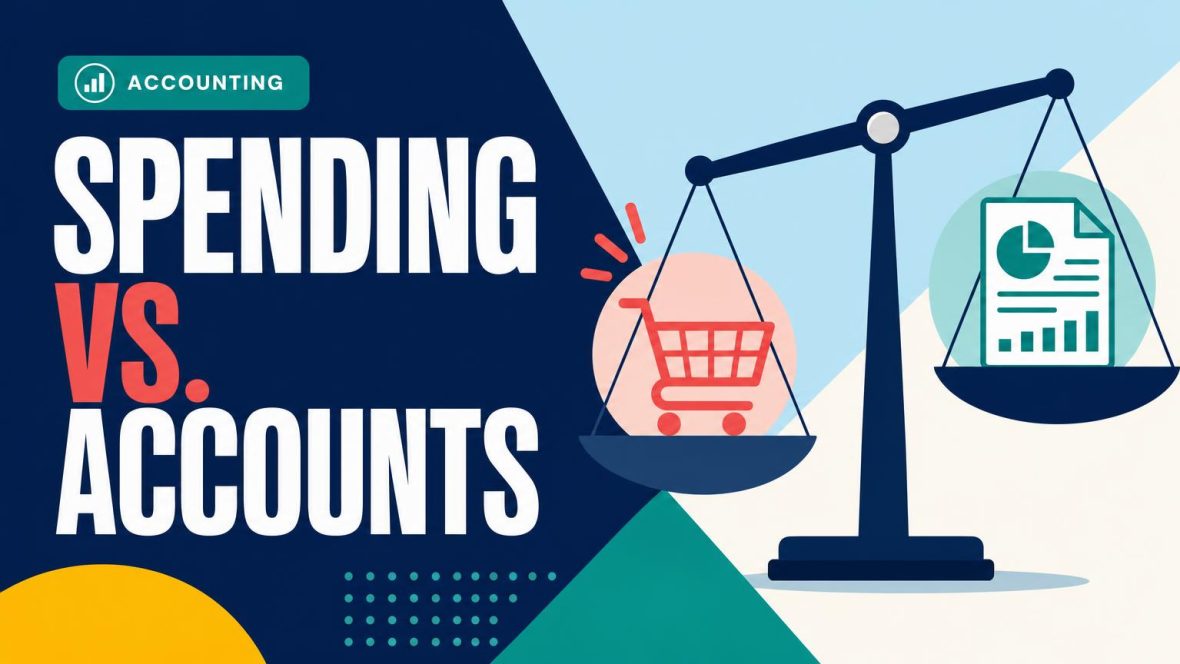
One transfer can generate three very different—and perfectly credible—figures.
A club announces a £60 million signing, yet its accounts may show only £12 million of transfer expense that season. Meanwhile, the bank balance might fall by £20 million. The apparent mismatch is not creative arithmetic: the player’s registration is usually recorded as an asset and amortized across the contract, so a five-year deal produces a £12 million annual charge.
Top Free Bets for October
BetUS
200% up to $1,000
18+. Full T&C's apply. Sports bonus: 100% match up to $500. Casino bonus: 100% match up to $500. Enter promo code NEW200 at deposit and get up to a $1000 bonus. Valid on your first three (3) deposits. Available for all deposit methods. Minimum deposit of $50.
18+. Full terms apply. The Bet Back Bonus is available for new customers on first-time deposits of $50 or more. To redeem, select the offer in the cashier while completing your first deposit. Make your pick(s) in the Sportsbook and then select ‘Opt In to Use Your Bonus’. A Bet Back Bonus pop-up will display, select ‘Claim’ and then enter the risk amount to place your bet. If it wins, you keep your profits. If it loses, get 100% of your risk refunded as Free Play with only 1-time rollover. Free Play can then be used to place bets in the Sportsbook and earn cash. Additional T&Cs apply, please visit MyBookie to access the Help Center or contact Live Chat for more details.
18+. Full T&C's apply. This promotion is available only to new accounts in North America. Freeplay amount must be wagered five times (5x rollover) before it becomes eligible for withdrawal. Only prematch (sportsbook) bets count toward the 5x rollover requirement. Each person may claim only one bonus. If a customer creates multiple accounts to exploit this promotion, bet105 will mark all related accounts as ineligible and reclaim the funds. If a client receives more than two free bets without making a deposit, any winnings from those bets will be forfeited. This promotion applies only to the initial deposit or if specifically assigned by bet105.
18+. Full terms apply. New BUSR members only. Minimum deposit of $50 required per qualifying deposits. Codes 300SB1, 300SB2, and 300SB3 must be entered at the time of each corresponding deposit.
Each code is valid one time only. Each bonus code must be claimed at least 24 hours apart. Only one promo code may be applied per deposit. A 20x rollover requirement applies to the combined total of your initial deposit and bonus before any withdrawal can be made. Redeemable in the Sportsbook only. BUSR management reserves the right to modify, suspend, or cancel this promotion at any time. Redeem each promo code in the cashier to get your bonus. Must be 18 or older. Please gamble responsibly. General House Rules Apply.
18+. Full terms apply. 100% up to $500 Bonus. Valid for non-crypto payment methods only. Minimum deposit amount $50. This offer is not available to customers from Canada or Mexico. The bonus code must be redeemed immediately after the deposit and before a wager has been placed. The sum of the deposit and the bonus are subject to rollover requirements of 12x at min. odds of -200 (1.5) before a new code can be redeemed. Max. $500 of each bet count towards the rollover requirements. Only bets placed on options that take place count towards the rollover requirements. Wagers on Horse Racing and Boosted Odds do not count towards the rollover requirements. All general Everygame Sportsbook rules apply.
21+. Full T&C's apply. Bonus: 35% of qualifying deposit, up to $105. Rollover: 8× (only sports action counts towards the rollover) deposit + bonus. Expiry: 7 days after credit. Hold period: 2 weeks. Payouts allowed only after rollover and hold period are completed. Example: Deposit $200 → Receive $50 Sports Free Play. Sports Free Play Rules: see the BetAnything General Reward Rules for eligible sports, wager types, odds, and rollover rules.
18+. Full T&C's apply. This bonus can only be redeemed on your first deposit. Rollover is 5x Sports/5x Horses/30x Casino on both the initial deposit and the bonus amount. Rollover in our Sportsbook, for winning wagers, will be determined by the lesser of your risk or win amount at the time of wager settlement; for losing wagers your risk amount will be credited to your rollover contribution. Bonus funds cannot be used for play on Live Dealer games. Live Dealer play does not count toward meeting Casino rollover requirements for withdrawal. If a withdrawal is made before the bonus terms are met, all bonus funds as well as any money earned by wagering the bonus will be forfeited.
Cash follows the payment schedule instead. An initial instalment may be paid immediately, with the rest due in later seasons. Public football transfer market figures often emphasize the headline fee—and may include conditional add-ons—while financial statements apply accounting rules and bank movements record actual payment dates. Each number answers a different question: deal value, reported expense, or cash paid.
One deal, three numbers
What the club records—and when
The asset, the cash bill, and the annual expense follow different accounting paths.
A club does not account for a footballer as property. The capitalized asset is the contractual registration right obtained through the transfer: the right to field the player and benefit from the employment contract for its limited term. Because that right should provide value across several seasons, the transfer cost is recorded as an intangible asset rather than expensed immediately.
Wages are different. They pay for the player’s services during the current period, so they are normally recognized as operating expenses as those services are provided. A five-year contract may support five years of amortization for the registration, but it does not turn five years of future salary into an asset on day one.
Three timelines, not one
Transfer coverage often mixes together figures that answer different questions:
Reported deal value describes the agreed transfer consideration, though headlines may include achievable add-ons or exclude associated costs.
Cash payments show when money is due. The selling club might receive the fee immediately, in installments, or partly through later contingent payments.
Amortization spreads the capitalized cost across the registration’s expected useful life, usually the contract term at acquisition.
For example, a £60 million fee payable in three annual £20 million installments for a five-year contract would ordinarily create £12 million of amortization per year. The first year’s cash payment may be £20 million, but that does not make the accounting expense £20 million. Installments mainly affect cash flow and transfer-fee payables; they do not usually determine the annual amortization charge.
This distinction also explains why gross spending and net spending cannot be read directly as a club’s profit-and-loss impact. Those measures summarize transfer activity, while the accounts recognize purchases and sales under different rules and on different schedules.
Key distinctions
The terms that keep the numbers separate
Registration right
The intangible asset acquired from the selling club, not ownership of the player as a person.
Capitalized cost
Transfer consideration and qualifying directly attributable costs recorded on the balance sheet.
Installment
A scheduled cash payment that settles part of the transfer liability.
Amortization
The periodic expense that allocates the registration’s capitalized cost over its useful life.
Wages
Payment for employment services, normally charged as an operating expense when earned.
Worked example
A £60 million fee on two different clocks
01
Record the registration at £60 million
A player signs a five-year contract, so the club recognizes the acquired registration as a £60 million intangible asset. The full amount is recorded even though it has not all been paid in cash.
02
Set annual amortization at £12 million
Using straight-line amortization, the calculation is £60 million divided by five years. The income statement therefore receives a £12 million expense in each full year.
03
Track the cash separately
Suppose the fee is payable in three £20 million installments. Each payment reduces cash and the amount owed to the selling club; it does not determine the annual amortization charge.
04
Close year one at £48 million
After the first £12 million charge, accumulated amortization is £12 million. The registration’s carrying value on the balance sheet is therefore £60 million minus £12 million, or £48 million.
05
Close year two at £36 million
A second £12 million charge takes accumulated amortization to £24 million. The remaining carrying value is £36 million, regardless of whether one, two, or all three cash installments have been paid.
This simplified example excludes financing effects, add-ons, impairment, and later contract changes.
The first charge may be smaller
Real accounts rarely align perfectly with neat contract years. Amortization may begin when the registration becomes available for use, rather than simply when negotiations conclude or cash is paid.
A late signing, delayed registration, or short reporting period can produce a partial first-year charge. The exact accounting policy and financial-year dates therefore matter when checking a club’s published figures.
Cost boundaries
The asset can exceed the headline fee
Direct costs may qualify; operating costs usually do not.
The quoted fixed transfer fee is usually the starting point, not necessarily the asset’s final recorded cost. Certain directly attributable costs—such as intermediary commissions or legal fees required to complete the registration—may also be capitalized, depending on the applicable accounting rules and the club’s policy.
The test is whether the expenditure was necessary to secure the player’s registration. Costs that support the wider football operation normally remain expenses rather than becoming part of the asset. Typical exclusions include:
the player’s salary, bonuses, and other employment costs;
scouting department salaries and travel;
general recruitment databases and analytics;
administrative overhead not tied specifically to the completed deal.
Contingent add-ons need more care. Appearance payments, trophy bonuses, sell-on clauses, and promotion-related sums differ in how certain they are and when they become payable. This is why add-ons can complicate reported transfer fees: a public “maximum package” may include amounts that are not initially recognized in the registration asset.
As conditions become probable, are triggered, or are reassessed, the accounting may change. Contract wording, timing, reporting standards, and club policy all matter, so outside estimates should not be treated as a precise reconstruction of the balance sheet.
Headline package does not equal booked cost
A deal announced as “£40m plus £10m” may begin with an asset near £40m, above it if qualifying transaction costs are included, or later rise when add-on conditions are met.
Revised schedule
An extension changes the future, not the past
A contract extension can lengthen the period over which the club expects to benefit from a player’s registration. The club takes the carrying value at the extension date and reallocates it across the revised remaining term. Amortization already recorded is left untouched.
Suppose a £60 million registration was initially amortized over five years at £12 million annually. After two years, its carrying value is £36 million. If the remaining term is extended from three years to five, the future annual charge falls to £7.2 million—but the original fee and the £24 million already expensed do not change.
This differs from an impairment. An impairment recognizes an immediate loss when the asset’s recoverable amount falls below its carrying value; subsequent amortization then starts from that reduced amount. An extension alone does not write the asset down or create a gain.
Loan fees follow the period of temporary registration rights, usually the loan term. Extending the player’s contract with the parent club does not automatically lengthen that period for the borrowing club. A renewed loan or permanent transfer creates revised rights—and potentially new fees—to account for on their own terms.
Sale accounting
A cheaper sale can still produce a profit
The comparison is with carrying value, not the original transfer fee.
A player bought for £60 million on a five-year contract produces £12 million of amortization each year. After two years, £24 million has been expensed, leaving a £36 million carrying value on the balance sheet.
If the player is then sold for £50 million, the accounting calculation is:
Measure
Amount
Sale proceeds
£50m
Less: carrying value removed
(£36m)
Accounting profit on disposal
£14m
The club has sold the player for £10 million less than the original fee, yet reports a £14 million profit. There is no contradiction: the original £60 million is no longer the relevant accounting benchmark because £24 million has already passed through earlier profit-and-loss accounts.
Several figures should remain separate:
Proceeds: the agreed £50 million sale price, subject to items such as sell-on clauses or transaction costs.
Book profit: proceeds minus the player’s remaining carrying value.
Cash received: whatever installments have actually been paid by the buying club at that date.
Net spend: an informal transfer-market measure, usually purchases minus sales; it is not accounting profit and often ignores payment timing.
Academy-player sales can look especially profitable. Internally developed registrations commonly have little or no carrying value because development costs are generally expensed as incurred. A £30 million academy sale could therefore create close to £30 million of accounting profit, even if the cash arrives over several years.
Reality check
Why the numbers refuse to match
Myth
Annual transfer fees should equal amortization.
Fact
Amortization includes registrations acquired in earlier years.
Why
The expense follows contract lives, not transfer-window timing.
Myth
Cash paid should equal registration additions.
Fact
Installments separate payment from asset recognition.
Why
Additions are generally recognized when control passes; cash may move later.
Myth
A public spending total should reconcile exactly.
Fact
Sources use different fees, currencies, add-ons, and reporting periods.
Why
Club accounts may also combine players, staff, and other registration rights.
Finding the trail
A practical reconciliation route
Follow the accounting movements rather than one headline total.
Begin with the intangible-assets note and its registration-rights roll-forward. Check opening cost and carrying value, additions, amortization, disposals, impairments, and closing balances. Additions are usually the closest accounting measure of registrations acquired, but they need not equal announced fees or cash paid.
Next, inspect transfer-related payables and receivables, then the investing section of the cash-flow statement. Changes in balances can explain why recognized additions and payments diverge.
Exact reconstruction may still be impossible. Clubs often disclose aggregated figures, while professional market-research data providers can differ on exchange rates, bonuses, loan fees, and undisclosed terms. A sensible reconciliation therefore identifies timing and scope differences instead of forcing every source into one total.
Reconciliation checklist
A repeatable way to make the figures agree
Establish the asset cost
Start with the fixed fee, then add only qualifying capitalized costs and recognized add-ons.
Set the accounting clock
Record the contract term and reporting period, prorating amortization where necessary.
Separate the cash schedule
List each installment by payment date; it does not determine annual amortization.
Roll forward the book value
Track original cost, additions, accumulated amortization, impairment, and the remaining carrying value.
Update later events
For an extension, spread the remaining value prospectively. For a disposal, compare proceeds with carrying value.
Conclusion
A single transfer therefore produces several valid numbers. Market spending describes deal activity; cash shows payments; balance-sheet value shows the unconsumed asset; annual expense allocates cost over time; and disposal profit compares sale proceeds with the remaining book value. They disagree because each answers a different question about value and timing.
Top Free Bets for October
BetUS
200% up to $1,000
18+. Full T&C's apply. Sports bonus: 100% match up to $500. Casino bonus: 100% match up to $500. Enter promo code NEW200 at deposit and get up to a $1000 bonus. Valid on your first three (3) deposits. Available for all deposit methods. Minimum deposit of $50.
18+. Full terms apply. The Bet Back Bonus is available for new customers on first-time deposits of $50 or more. To redeem, select the offer in the cashier while completing your first deposit. Make your pick(s) in the Sportsbook and then select ‘Opt In to Use Your Bonus’. A Bet Back Bonus pop-up will display, select ‘Claim’ and then enter the risk amount to place your bet. If it wins, you keep your profits. If it loses, get 100% of your risk refunded as Free Play with only 1-time rollover. Free Play can then be used to place bets in the Sportsbook and earn cash. Additional T&Cs apply, please visit MyBookie to access the Help Center or contact Live Chat for more details.
18+. Full T&C's apply. This promotion is available only to new accounts in North America. Freeplay amount must be wagered five times (5x rollover) before it becomes eligible for withdrawal. Only prematch (sportsbook) bets count toward the 5x rollover requirement. Each person may claim only one bonus. If a customer creates multiple accounts to exploit this promotion, bet105 will mark all related accounts as ineligible and reclaim the funds. If a client receives more than two free bets without making a deposit, any winnings from those bets will be forfeited. This promotion applies only to the initial deposit or if specifically assigned by bet105.
18+. Full terms apply. New BUSR members only. Minimum deposit of $50 required per qualifying deposits. Codes 300SB1, 300SB2, and 300SB3 must be entered at the time of each corresponding deposit.
Each code is valid one time only. Each bonus code must be claimed at least 24 hours apart. Only one promo code may be applied per deposit. A 20x rollover requirement applies to the combined total of your initial deposit and bonus before any withdrawal can be made. Redeemable in the Sportsbook only. BUSR management reserves the right to modify, suspend, or cancel this promotion at any time. Redeem each promo code in the cashier to get your bonus. Must be 18 or older. Please gamble responsibly. General House Rules Apply.
18+. Full terms apply. 100% up to $500 Bonus. Valid for non-crypto payment methods only. Minimum deposit amount $50. This offer is not available to customers from Canada or Mexico. The bonus code must be redeemed immediately after the deposit and before a wager has been placed. The sum of the deposit and the bonus are subject to rollover requirements of 12x at min. odds of -200 (1.5) before a new code can be redeemed. Max. $500 of each bet count towards the rollover requirements. Only bets placed on options that take place count towards the rollover requirements. Wagers on Horse Racing and Boosted Odds do not count towards the rollover requirements. All general Everygame Sportsbook rules apply.
21+. Full T&C's apply. Bonus: 35% of qualifying deposit, up to $105. Rollover: 8× (only sports action counts towards the rollover) deposit + bonus. Expiry: 7 days after credit. Hold period: 2 weeks. Payouts allowed only after rollover and hold period are completed. Example: Deposit $200 → Receive $50 Sports Free Play. Sports Free Play Rules: see the BetAnything General Reward Rules for eligible sports, wager types, odds, and rollover rules.
18+. Full T&C's apply. This bonus can only be redeemed on your first deposit. Rollover is 5x Sports/5x Horses/30x Casino on both the initial deposit and the bonus amount. Rollover in our Sportsbook, for winning wagers, will be determined by the lesser of your risk or win amount at the time of wager settlement; for losing wagers your risk amount will be credited to your rollover contribution. Bonus funds cannot be used for play on Live Dealer games. Live Dealer play does not count toward meeting Casino rollover requirements for withdrawal. If a withdrawal is made before the bonus terms are met, all bonus funds as well as any money earned by wagering the bonus will be forfeited.
Hi I'm Andy and I love to report on the latest football scores and Tables. I also like to have a bet on the football and occasionaly on the horses. On this website I have new bookmaker offers listed that will give you free bets and bonuses to help you beat the bookies. Enjoy your stay.