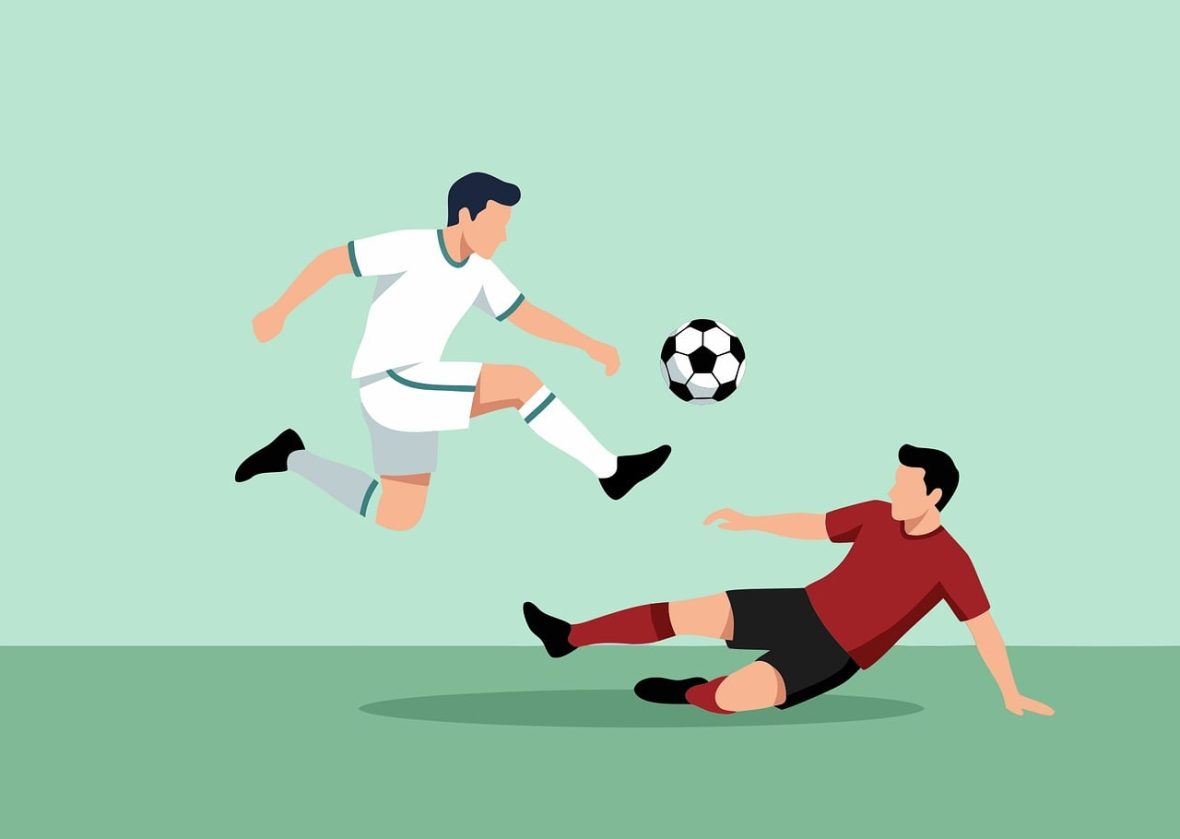
A busy defender is not necessarily a better defender—sometimes the best intervention happens before a challenge is needed.
One midfielder slides in after an opponent receives the ball; another anticipates the pass and steps into its path. Both regain possession, but the first records a tackle and the second an interception. The totals reward different solutions: reacting to a ball carrier versus preventing the ball from reaching one.
Top Free Bets for October
BetUS
200% up to $1,000
18+. Full T&C's apply. Sports bonus: 100% match up to $500. Casino bonus: 100% match up to $500. Enter promo code NEW200 at deposit and get up to a $1000 bonus. Valid on your first three (3) deposits. Available for all deposit methods. Minimum deposit of $50.
18+. Full terms apply. The Bet Back Bonus is available for new customers on first-time deposits of $50 or more. To redeem, select the offer in the cashier while completing your first deposit. Make your pick(s) in the Sportsbook and then select ‘Opt In to Use Your Bonus’. A Bet Back Bonus pop-up will display, select ‘Claim’ and then enter the risk amount to place your bet. If it wins, you keep your profits. If it loses, get 100% of your risk refunded as Free Play with only 1-time rollover. Free Play can then be used to place bets in the Sportsbook and earn cash. Additional T&Cs apply, please visit MyBookie to access the Help Center or contact Live Chat for more details.
18+. Full T&C's apply. This promotion is available only to new accounts in North America. Freeplay amount must be wagered five times (5x rollover) before it becomes eligible for withdrawal. Only prematch (sportsbook) bets count toward the 5x rollover requirement. Each person may claim only one bonus. If a customer creates multiple accounts to exploit this promotion, bet105 will mark all related accounts as ineligible and reclaim the funds. If a client receives more than two free bets without making a deposit, any winnings from those bets will be forfeited. This promotion applies only to the initial deposit or if specifically assigned by bet105.
18+. Full terms apply. New BUSR members only. Minimum deposit of $50 required per qualifying deposits. Codes 300SB1, 300SB2, and 300SB3 must be entered at the time of each corresponding deposit.
Each code is valid one time only. Each bonus code must be claimed at least 24 hours apart. Only one promo code may be applied per deposit. A 20x rollover requirement applies to the combined total of your initial deposit and bonus before any withdrawal can be made. Redeemable in the Sportsbook only. BUSR management reserves the right to modify, suspend, or cancel this promotion at any time. Redeem each promo code in the cashier to get your bonus. Must be 18 or older. Please gamble responsibly. General House Rules Apply.
18+. Full terms apply. 100% up to $500 Bonus. Valid for non-crypto payment methods only. Minimum deposit amount $50. This offer is not available to customers from Canada or Mexico. The bonus code must be redeemed immediately after the deposit and before a wager has been placed. The sum of the deposit and the bonus are subject to rollover requirements of 12x at min. odds of -200 (1.5) before a new code can be redeemed. Max. $500 of each bet count towards the rollover requirements. Only bets placed on options that take place count towards the rollover requirements. Wagers on Horse Racing and Boosted Odds do not count towards the rollover requirements. All general Everygame Sportsbook rules apply.
21+. Full T&C's apply. Bonus: 35% of qualifying deposit, up to $105. Rollover: 8× (only sports action counts towards the rollover) deposit + bonus. Expiry: 7 days after credit. Hold period: 2 weeks. Payouts allowed only after rollover and hold period are completed. Example: Deposit $200 → Receive $50 Sports Free Play. Sports Free Play Rules: see the BetAnything General Reward Rules for eligible sports, wager types, odds, and rollover rules.
18+. Full T&C's apply. This bonus can only be redeemed on your first deposit. Rollover is 5x Sports/5x Horses/30x Casino on both the initial deposit and the bonus amount. Rollover in our Sportsbook, for winning wagers, will be determined by the lesser of your risk or win amount at the time of wager settlement; for losing wagers your risk amount will be credited to your rollover contribution. Bonus funds cannot be used for play on Live Dealer games. Live Dealer play does not count toward meeting Casino rollover requirements for withdrawal. If a withdrawal is made before the bonus terms are met, all bonus funds as well as any money earned by wagering the bonus will be forfeited.
Opportunity matters just as much as ability. A player in a deep, frequently pressured side may face far more tackle situations, while an aggressive press or compact shape can create interception chances. Role, territory, possession share, success rate, and what happens after the recovery all affect the meaning of the numbers. Raw counts alone cannot identify the stronger defender.
Key distinctions
What the Numbers Actually Count
Tackle attempted
A direct challenge made for the ball. An attempt may still be recorded when the opponent keeps possession or the ball runs to another attacker.
Tackle won
A challenge in which the defender gets the ball away from the opponent. “Won” does not always mean the defender’s team gains possession.
Possession won
A broader outcome that credits the defending team with recovering the ball. It separates momentary disruption from a controlled turnover.
Interception
A pass cut out before it reaches its intended target, usually through anticipation and positioning rather than a direct challenge.
Context
These distinctions matter when interpreting an individual player’s performance: a high tackle count can reflect frequent pressure, while interceptions may indicate effective reading of passing lanes.
Data caveat
Check the provider’s definitions
Opta, league websites, fantasy platforms, and other data providers may apply different rules. One may count only tackles that dispossess an opponent; another may separate attempts, wins, and possession recovered. Interceptions can also exclude blocked passes or loose-ball recoveries. Totals from different sources should not be compared without checking their event definitions.
Reading a High Tackle Count
Volume gains meaning only when paired with context.
A high tackle total is not automatically proof of excellent defending. It may reflect an aggressive presser closing down several opponents, a strong dueller repeatedly winning one-on-one contests, or a midfielder reacting quickly to loose balls. It can also mean the player’s team spends long periods without possession, creating constant defensive work.
Location changes the story
Tackles made high up the pitch often support a pressing plan, especially when they lead to turnovers near goal. Frequent tackles around midfield may show useful ball-winning and control of transitions. A large number near the defending team’s penalty area is more ambiguous: the defender may be performing well, but the team may also be allowing too much pressure.
Success rate adds another layer. Ten successful tackles from 12 attempts suggest reliable duel ability; ten from 22 attempts reveal far more bypassed challenges and possible gaps left behind.
When judging tackle volume, three questions help:
Where were the challenges made?
How often did the player win them?
Why did so many tackle opportunities arise?
The strongest reading combines all three. High volume with a good success rate in tactically useful areas is encouraging; high volume caused by repeated emergency defending may be a warning sign.
Reading an Interception Count
Why positioning and context matter as much as volume
An interception usually begins before the ball is played. A defender reads the passer’s body shape, tracks nearby runs, and occupies a lane where the pass can be cut out without leaving another threat free. The number therefore says more about anticipation and positioning than raw reaction speed.
What a high total may reveal
Frequent interceptions can indicate that a player:
recognizes passing patterns early;
protects central or dangerous lanes;
steps forward at the right moment;
coordinates well with covering teammates;
creates transition chances by winning possession cleanly.
The final point matters. An interception controlled into space can launch a counterattack, while a desperate touch straight back to the opposition has less value. Location, control, and the next action help distinguish the two.
Low totals are not automatically a concern. A disciplined marker may deny the intended receiver so effectively that the pass is never attempted. Defenders on possession-dominant teams also face fewer opposition passes, while opponents may deliberately build down the opposite side or avoid a well-protected lane.
Interception figures are most informative alongside team possession, defensive territory, player role, and pass direction. They reward visible ball wins, but cannot count the passes that good positioning quietly discourages.
Side by side
How tackles and interceptions differ
Similar outcomes, different moments in an attack
A tackle and an interception may both halt an attack, but they enter the play at different moments. Tackles usually respond to possession already established, whereas interceptions usually prevent the intended recipient from gaining possession. “Reactive” and “anticipatory” are useful tendencies, not strict labels: a defender can anticipate a tackle or make a late, reactive interception.
Factor
Tackle
Interception
Trigger
An opponent controls or contests the ball
A pass travels toward a teammate
Contact
Often involves a direct duel, though a clean poke may involve little contact
Usually cuts out the ball without challenging the intended receiver
Core skill
Timing, balance and duel technique
Positioning, scanning and reading passing cues
Main risk
A foul, missed challenge or being dribbled past
Vacating space or exposing another passing lane after a poor read
Typical location
Common wherever opponents carry the ball, including wide channels and pressing zones
Often valuable in central lanes, between lines or around the penalty area
Next phase
The ball may be won, knocked loose or sent out
The defender often has a clearer chance to control and begin a transition
Consider a midfield sequence. An attacker receives between the lines and turns; a midfielder closes from behind and tackles, disrupting an attack that has already reached its target. The loose ball returns to the attacking side, which recycles possession.
Seconds later, the same midfielder spots a square pass, steps across the lane and intercepts before the receiver can touch it. The interception stops the attack one stage earlier—and the quality of the first pass after the regain determines whether that reading becomes a counterattack or merely a defensive reset.
Role matters
Position changes the benchmark
Defensive numbers only make sense within a player’s role and team structure.
A centre-back may record few tackles because the team controls possession, the defensive line stays compact, or opponents avoid that zone. Interceptions, aerial duels, clearances, and errors can provide essential context.
Full-backs often face more one-on-one challenges, so higher tackle totals are unsurprising. Their numbers also depend on whether they overlap aggressively, defend deep, or tuck into midfield.
Holding midfielders usually have the best opportunity to combine tackles with interceptions. Even then, a screening midfielder who blocks passing lanes may post quieter totals than a ball-hunter who steps forward frequently.
Pressing attackers can collect tackles high up the pitch, while their interceptions often reflect coordinated pressure rather than conventional defending. Goalkeepers rarely register either action; claims, saves, sweeping actions, and distribution are far more relevant.
For that reason, comparing defenders with players in other positions through raw totals is usually misleading. Fair comparisons use similar roles, comparable minutes, and preferably per-90 figures—then account for possession, territory, and tactical instructions.
Match context
How team tactics shape the numbers
A high press creates tackle chances near the opponent’s goal, especially when a receiver is forced into a rushed touch. It can also produce interceptions if passing lanes are closed in coordination. Man-marking tends to increase direct duels, while zonal coverage often gives defenders more chances to step into passes.
A low block changes the mix. With little space behind the defence, players may intercept square passes, but sustained pressure more often produces blocked shots, headed clearances, and tackles around the penalty area. The distinction matters: blocks and clearances reveal defensive workload that tackle and interception totals miss.
Possession share also sets the opportunity level. A side controlling 65% of the ball simply spends less time defending, so modest totals can still represent an effective performance. Conversely, a team pinned back may accumulate actions without defending especially well.
Opponent strategy matters too. Direct long balls invite aerial clearances and second-ball tackles; patient short passing offers interception opportunities. Dribbling-heavy opponents create more one-on-one challenges, whereas early crosses shift activity toward blocks and clearances. No defensive metric is tactically neutral.
Practical comparison
A better way to compare defenders
01
Start with minutes and totals
A season total partly measures availability. Compare playing time first, since 60 minutes per match and 90 minutes per match create very different chances to accumulate actions.
02
Convert totals to per-90 rates
Per-90 figures separate action frequency from minutes played. They stabilize comparisons, although small samples and substitute appearances can still distort the result.
03
Estimate defensive opportunity
Teams with little possession usually face more attacks. Opposition-possession figures help show whether a defender records many actions because of heavy pressure or unusual activity within limited defensive time.
04
Check success and location
Tackle attempts, success rates, and ball recoveries distinguish frequent involvement from effective outcomes. Event maps add territory: an action near halfway often reflects pressing, while one near goal may signal sustained pressure.
05
Compare like roles, then watch
Role-matched percentiles show whether a rate is common or exceptional within a chosen group. Video and event sequences remain essential for judging timing, restraint, cover, and whether an apparent mistake was caused by a teammate’s movement.
Adjusted numbers are estimates, not verdicts
Possession-adjusted rates project actions onto a common share of opposition possession, but defensive opportunity does not rise perfectly as possession falls. Team shape, territory, opponent quality, and data-provider definitions still matter. Percentiles also change with the comparison pool, minimum-minutes cutoff, and competition.
Common misconceptions
Three defensive myths worth dropping
Myth
More tackles always mean better defending.
Reality
A high total may reflect heavy pressure, repeated exposure, or poor positioning.
Why it matters
A defender who closes a lane early can prevent the duel entirely; another may tackle only after allowing dangerous progress.
Myth
Interceptions are inherently safe.
Reality
Attempting one can mean abandoning a runner or stepping out of shape.
Why it matters
Even a successful interception may send the ball to an opponent, so location, control, and the risk taken all matter.
Myth
Zero tackles or interceptions means inactivity.
Reality
Good positioning can discourage passes and funnel attacks elsewhere.
Why it matters
Marking, covering space, tracking runs, and maintaining the defensive line may leave no event in the data.
Data caveat
The same play may produce different numbers
Providers may classify one touch as an interception, deflection, blocked pass, tackle, or shared event. Definitions should therefore be checked before comparing sources.
Ratings create another distortion: systems that reward visible events can undervalue restraint. That is why defensive actions can affect player ratings more than quiet positional discipline.
Key Takeaways
Direct contestsTackles show how often and effectively a defender challenges an opponent in possession.
Reading the passInterceptions show anticipation: spotting the option, occupying the lane, and disrupting the pass before a duel begins.
Role before totalsThe stronger performance is the one that fulfills the player’s assignment and supports the team’s defensive plan.
Conclusion
A pressing full-back may need tackles; a centre-back protecting space may excel through interceptions or deterrence. Neither column wins alone. Context decides whether an action reduced danger, restored control, and served the next phase.
Top Free Bets for October
BetUS
200% up to $1,000
18+. Full T&C's apply. Sports bonus: 100% match up to $500. Casino bonus: 100% match up to $500. Enter promo code NEW200 at deposit and get up to a $1000 bonus. Valid on your first three (3) deposits. Available for all deposit methods. Minimum deposit of $50.
18+. Full terms apply. The Bet Back Bonus is available for new customers on first-time deposits of $50 or more. To redeem, select the offer in the cashier while completing your first deposit. Make your pick(s) in the Sportsbook and then select ‘Opt In to Use Your Bonus’. A Bet Back Bonus pop-up will display, select ‘Claim’ and then enter the risk amount to place your bet. If it wins, you keep your profits. If it loses, get 100% of your risk refunded as Free Play with only 1-time rollover. Free Play can then be used to place bets in the Sportsbook and earn cash. Additional T&Cs apply, please visit MyBookie to access the Help Center or contact Live Chat for more details.
18+. Full T&C's apply. This promotion is available only to new accounts in North America. Freeplay amount must be wagered five times (5x rollover) before it becomes eligible for withdrawal. Only prematch (sportsbook) bets count toward the 5x rollover requirement. Each person may claim only one bonus. If a customer creates multiple accounts to exploit this promotion, bet105 will mark all related accounts as ineligible and reclaim the funds. If a client receives more than two free bets without making a deposit, any winnings from those bets will be forfeited. This promotion applies only to the initial deposit or if specifically assigned by bet105.
18+. Full terms apply. New BUSR members only. Minimum deposit of $50 required per qualifying deposits. Codes 300SB1, 300SB2, and 300SB3 must be entered at the time of each corresponding deposit.
Each code is valid one time only. Each bonus code must be claimed at least 24 hours apart. Only one promo code may be applied per deposit. A 20x rollover requirement applies to the combined total of your initial deposit and bonus before any withdrawal can be made. Redeemable in the Sportsbook only. BUSR management reserves the right to modify, suspend, or cancel this promotion at any time. Redeem each promo code in the cashier to get your bonus. Must be 18 or older. Please gamble responsibly. General House Rules Apply.
18+. Full terms apply. 100% up to $500 Bonus. Valid for non-crypto payment methods only. Minimum deposit amount $50. This offer is not available to customers from Canada or Mexico. The bonus code must be redeemed immediately after the deposit and before a wager has been placed. The sum of the deposit and the bonus are subject to rollover requirements of 12x at min. odds of -200 (1.5) before a new code can be redeemed. Max. $500 of each bet count towards the rollover requirements. Only bets placed on options that take place count towards the rollover requirements. Wagers on Horse Racing and Boosted Odds do not count towards the rollover requirements. All general Everygame Sportsbook rules apply.
21+. Full T&C's apply. Bonus: 35% of qualifying deposit, up to $105. Rollover: 8× (only sports action counts towards the rollover) deposit + bonus. Expiry: 7 days after credit. Hold period: 2 weeks. Payouts allowed only after rollover and hold period are completed. Example: Deposit $200 → Receive $50 Sports Free Play. Sports Free Play Rules: see the BetAnything General Reward Rules for eligible sports, wager types, odds, and rollover rules.
18+. Full T&C's apply. This bonus can only be redeemed on your first deposit. Rollover is 5x Sports/5x Horses/30x Casino on both the initial deposit and the bonus amount. Rollover in our Sportsbook, for winning wagers, will be determined by the lesser of your risk or win amount at the time of wager settlement; for losing wagers your risk amount will be credited to your rollover contribution. Bonus funds cannot be used for play on Live Dealer games. Live Dealer play does not count toward meeting Casino rollover requirements for withdrawal. If a withdrawal is made before the bonus terms are met, all bonus funds as well as any money earned by wagering the bonus will be forfeited.
Hi I'm Andy and I love to report on the latest football scores and Tables. I also like to have a bet on the football and occasionaly on the horses. On this website I have new bookmaker offers listed that will give you free bets and bonuses to help you beat the bookies. Enjoy your stay.