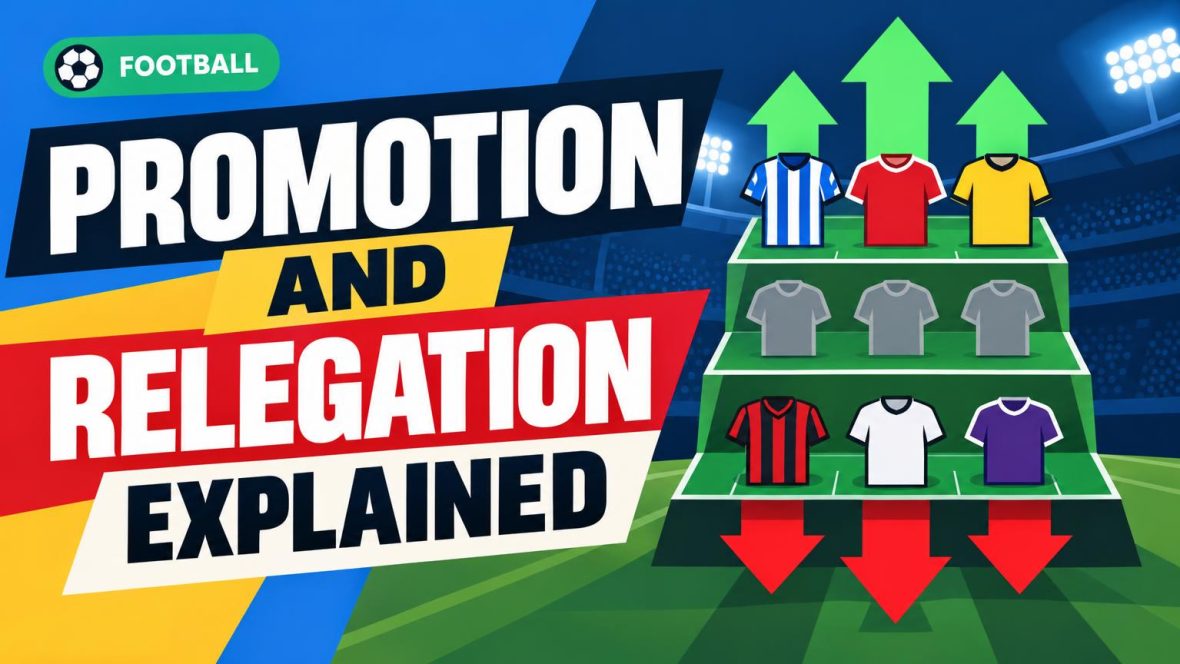
One result can change the division a club plays in next season.
A 1–0 win late in the season might lift a club from third to second, replacing a nervous playoff with automatic promotion. At the other end of the table, a rival’s win can push a club into a relegation place without that club even playing.
Top Free Bets for October
BetUS
200% up to $1,000
18+. Full T&C's apply. Sports bonus: 100% match up to $500. Casino bonus: 100% match up to $500. Enter promo code NEW200 at deposit and get up to a $1000 bonus. Valid on your first three (3) deposits. Available for all deposit methods. Minimum deposit of $50.
18+. Full terms apply. The Bet Back Bonus is available for new customers on first-time deposits of $50 or more. To redeem, select the offer in the cashier while completing your first deposit. Make your pick(s) in the Sportsbook and then select ‘Opt In to Use Your Bonus’. A Bet Back Bonus pop-up will display, select ‘Claim’ and then enter the risk amount to place your bet. If it wins, you keep your profits. If it loses, get 100% of your risk refunded as Free Play with only 1-time rollover. Free Play can then be used to place bets in the Sportsbook and earn cash. Additional T&Cs apply, please visit MyBookie to access the Help Center or contact Live Chat for more details.
18+. Full T&C's apply. This promotion is available only to new accounts in North America. Freeplay amount must be wagered five times (5x rollover) before it becomes eligible for withdrawal. Only prematch (sportsbook) bets count toward the 5x rollover requirement. Each person may claim only one bonus. If a customer creates multiple accounts to exploit this promotion, bet105 will mark all related accounts as ineligible and reclaim the funds. If a client receives more than two free bets without making a deposit, any winnings from those bets will be forfeited. This promotion applies only to the initial deposit or if specifically assigned by bet105.
18+. Full terms apply. New BUSR members only. Minimum deposit of $50 required per qualifying deposits. Codes 300SB1, 300SB2, and 300SB3 must be entered at the time of each corresponding deposit.
Each code is valid one time only. Each bonus code must be claimed at least 24 hours apart. Only one promo code may be applied per deposit. A 20x rollover requirement applies to the combined total of your initial deposit and bonus before any withdrawal can be made. Redeemable in the Sportsbook only. BUSR management reserves the right to modify, suspend, or cancel this promotion at any time. Redeem each promo code in the cashier to get your bonus. Must be 18 or older. Please gamble responsibly. General House Rules Apply.
18+. Full terms apply. 100% up to $500 Bonus. Valid for non-crypto payment methods only. Minimum deposit amount $50. This offer is not available to customers from Canada or Mexico. The bonus code must be redeemed immediately after the deposit and before a wager has been placed. The sum of the deposit and the bonus are subject to rollover requirements of 12x at min. odds of -200 (1.5) before a new code can be redeemed. Max. $500 of each bet count towards the rollover requirements. Only bets placed on options that take place count towards the rollover requirements. Wagers on Horse Racing and Boosted Odds do not count towards the rollover requirements. All general Everygame Sportsbook rules apply.
21+. Full T&C's apply. Bonus: 35% of qualifying deposit, up to $105. Rollover: 8× (only sports action counts towards the rollover) deposit + bonus. Expiry: 7 days after credit. Hold period: 2 weeks. Payouts allowed only after rollover and hold period are completed. Example: Deposit $200 → Receive $50 Sports Free Play. Sports Free Play Rules: see the BetAnything General Reward Rules for eligible sports, wager types, odds, and rollover rules.
18+. Full T&C's apply. This bonus can only be redeemed on your first deposit. Rollover is 5x Sports/5x Horses/30x Casino on both the initial deposit and the bonus amount. Rollover in our Sportsbook, for winning wagers, will be determined by the lesser of your risk or win amount at the time of wager settlement; for losing wagers your risk amount will be credited to your rollover contribution. Bonus funds cannot be used for play on Live Dealer games. Live Dealer play does not count toward meeting Casino rollover requirements for withdrawal. If a withdrawal is made before the bonus terms are met, all bonus funds as well as any money earned by wagering the bonus will be forfeited.
Promotion moves clubs into a higher division; relegation sends them into a lower one. League position usually determines who goes straight up or down, while clubs near the promotion places may compete in playoffs for another spot. The exact number of places varies by league, so a glance at the table’s promotion, playoff and relegation markers makes a late-season score much easier to understand.
Key terms
What promotion and relegation mean
Promotion
A club moves into a higher division for the following season.
Relegation
A club moves into a lower division for the following season.
Division
A level of competition whose clubs play a league season against one another.
League pyramid
The connected levels through which clubs can move up or down over time.
Promotion and relegation change which league a club belongs to next season; they do not move it into a different division halfway through the current one. The divisions form a pyramid, with higher levels above lower ones. For a wider view of how those levels fit together, see how football leagues work around the world.
Movement is generally one level at a time. A club promoted from the third division enters the second division, not the first; a club relegated from the second enters the third. That gives clubs a route upward while keeping each season’s change manageable. The exact names and number of divisions differ between countries, but the adjacent-level principle makes a league table easier to read: the places near its top and bottom can affect where clubs play the following year.
How the league table decides places
Most leagues award three points for a win, one for a draw and none for a loss. Clubs are ranked by their points totals across the season. If they finish level, the competition’s tie-breakers determine their order; these may include goal difference, goals scored or head-to-head results. The rules vary by competition, and some allow for a deciding match if other measures cannot separate the teams.
A league table during the season is only a snapshot. A club in a promotion place might have played more matches than the team chasing it, while a side in the relegation places may still have enough fixtures to climb out. Results elsewhere can also change a club’s position when it does not play. A place is confirmed only when remaining matches cannot affect it, or when the season ends and the standings are settled.
The final table determines which clubs take automatic places and which enter playoffs. But a playoff berth is a chance, not a completed promotion or escape from relegation: the club must still win the required matches. Its league position may therefore be settled before its fate is.
What automatic promotion guarantees
An automatic promotion place is a direct route up: a club that finishes in one of the designated positions moves to the higher division for the following season. Once the final table is settled, there is no extra match to win.
In England’s Championship, the clubs finishing first and second are automatically promoted to the Premier League. The second-placed side does not need to win a playoff or beat the champions; its league position is enough. In a close run-in, a club can therefore secure promotion before it secures the title. A club just below second may still have another route up, but it has missed the automatic places.
The cutoff is not universal. Each competition sets its own number of automatic promotion places, and that number can differ even between divisions in the same country. When reading a league table, the useful question is where that competition’s automatic places end—not whether the Championship’s top-two rule applies.
Why a playoff place is not promotion
Finishing third through sixth in the Championship earns a club a place in a four-team playoff, not promotion to the Premier League. The table decides which clubs get that chance; the EFL playoff system decides which one takes the remaining promotion place. Even a third-placed side that finished well ahead of sixth must win its postseason matches to go up.
How the final place is won
Semi-finals: Third plays sixth, while fourth plays fifth. Each pair plays twice, once at each club’s ground, and the scores are added together. If the aggregate score is level after the second match, extra time and then, if needed, penalties decide who advances.
Final: The two semi-final winners meet in a single match, usually at Wembley. The winner is promoted; the loser stays in the Championship. Extra time and penalties settle the final if it remains level.
A higher league finish brings a favourable semi-final pairing on paper: third faces sixth rather than fourth or fifth, and plays the second leg at home. It does not provide a goal advantage or a guaranteed place in the final. That is why qualifying through the table and actually winning promotion are two separate achievements.
How direct relegation works
In the Premier League, the clubs finishing 18th, 19th and 20th are relegated directly to the Championship. There is no survival playoff for those three places: once the final table is settled, the clubs in them go down. A team in 17th stays in the Premier League, even if it finishes only one point ahead of 18th.
The dividing line matters while matches are still being played. A club six points behind 17th with two games left might still stay up, depending on results and tie-breakers. Once it can no longer finish above the relegation places, it is mathematically relegated. It still plays its remaining matches, but even wins cannot save it if a safe position is out of reach.
The division change takes effect the following season, not halfway through the current one. A club relegated in May completes that Premier League campaign, then begins the next in the Championship. Good results after that cannot undo the relegation; the route back is to earn promotion. The Premier League sends down three clubs, but each competition sets its own number of relegation places.
Example
How the Premier League and Championship swap clubs
01
Three Premier League clubs go down
The teams finishing 18th, 19th and 20th leave the Premier League for the Championship. That creates three openings in the top flight for the following season.
02
Two Championship clubs go straight up
The Championship’s first- and second-place finishers take two of those openings automatically. They have no further matches to win to secure promotion.
03
The playoff winner takes the third opening
Championship teams finishing third through sixth compete for the remaining place. Only the playoff final winner goes up; the other three stay in the Championship.
04
Both divisions prepare for new opponents
The Premier League loses three clubs and gains three, keeping its membership at 20. The Championship sends three clubs upward and receives three from above, though its full lineup also changes through promotion and relegation involving League One.
There is no match between the divisions
The 18th-placed Premier League club does not play the Championship playoff winner to decide who gets the place. Relegation and promotion are settled separately within each competition.
When relegation is decided by a playoff
A direct place settles a club’s fate when the league table is final. In Germany’s Bundesliga, the bottom two clubs are relegated, while the top two in the second division, 2. Bundesliga, are promoted. The remaining places at that boundary are settled differently: the Bundesliga’s 16th-place club faces the second division’s third-place club in a playoff.
The Bundesliga relegation playoff is played over two legs, with each club hosting once. The scores are added together; if the clubs are level after the second leg, extra time and, if needed, penalties decide the winner. The winner plays in the Bundesliga the following season, while the loser plays in 2. Bundesliga.
That makes third place in the second division an opportunity to go up, not a promotion place in itself. Equally, finishing 16th in the top division puts a club at risk rather than sending it straight down. A club that finishes 17th has no such second chance.
Results on the pitch are not always the only condition, especially farther down a league pyramid. A club may also need to meet licensing requirements, such as financial or ground standards, before it can take a place in a higher division. The precise rules depend on the competition.
Not every league has an up-or-down route
Some leagues do not use promotion and relegation at all. In Major League Soccer, clubs do not move between MLS and a lower division based on their league finish.
Reading the table
How to tell what a league position means
Identify the divisions on either side
Check which league sits above and below the club’s current division; those are its possible destinations next season.
Find the automatic promotion places
These positions send clubs up without another match.
Separate playoff places from promotion places
A playoff position earns a chance to go up, not promotion itself.
Mark the relegation places
Check how many clubs go down and whether any relegation playoff applies.
Check the current rules and tie-breakers
Official competition rules settle close finishes and may include eligibility requirements. A live table shows the stakes, but only the final standings settle the places.
Conclusion
A club’s position is only the starting point. The competition’s rules determine whether that place means an automatic move, a playoff, or no change at all.
Top Free Bets for October
BetUS
200% up to $1,000
18+. Full T&C's apply. Sports bonus: 100% match up to $500. Casino bonus: 100% match up to $500. Enter promo code NEW200 at deposit and get up to a $1000 bonus. Valid on your first three (3) deposits. Available for all deposit methods. Minimum deposit of $50.
18+. Full terms apply. The Bet Back Bonus is available for new customers on first-time deposits of $50 or more. To redeem, select the offer in the cashier while completing your first deposit. Make your pick(s) in the Sportsbook and then select ‘Opt In to Use Your Bonus’. A Bet Back Bonus pop-up will display, select ‘Claim’ and then enter the risk amount to place your bet. If it wins, you keep your profits. If it loses, get 100% of your risk refunded as Free Play with only 1-time rollover. Free Play can then be used to place bets in the Sportsbook and earn cash. Additional T&Cs apply, please visit MyBookie to access the Help Center or contact Live Chat for more details.
18+. Full T&C's apply. This promotion is available only to new accounts in North America. Freeplay amount must be wagered five times (5x rollover) before it becomes eligible for withdrawal. Only prematch (sportsbook) bets count toward the 5x rollover requirement. Each person may claim only one bonus. If a customer creates multiple accounts to exploit this promotion, bet105 will mark all related accounts as ineligible and reclaim the funds. If a client receives more than two free bets without making a deposit, any winnings from those bets will be forfeited. This promotion applies only to the initial deposit or if specifically assigned by bet105.
18+. Full terms apply. New BUSR members only. Minimum deposit of $50 required per qualifying deposits. Codes 300SB1, 300SB2, and 300SB3 must be entered at the time of each corresponding deposit.
Each code is valid one time only. Each bonus code must be claimed at least 24 hours apart. Only one promo code may be applied per deposit. A 20x rollover requirement applies to the combined total of your initial deposit and bonus before any withdrawal can be made. Redeemable in the Sportsbook only. BUSR management reserves the right to modify, suspend, or cancel this promotion at any time. Redeem each promo code in the cashier to get your bonus. Must be 18 or older. Please gamble responsibly. General House Rules Apply.
18+. Full terms apply. 100% up to $500 Bonus. Valid for non-crypto payment methods only. Minimum deposit amount $50. This offer is not available to customers from Canada or Mexico. The bonus code must be redeemed immediately after the deposit and before a wager has been placed. The sum of the deposit and the bonus are subject to rollover requirements of 12x at min. odds of -200 (1.5) before a new code can be redeemed. Max. $500 of each bet count towards the rollover requirements. Only bets placed on options that take place count towards the rollover requirements. Wagers on Horse Racing and Boosted Odds do not count towards the rollover requirements. All general Everygame Sportsbook rules apply.
21+. Full T&C's apply. Bonus: 35% of qualifying deposit, up to $105. Rollover: 8× (only sports action counts towards the rollover) deposit + bonus. Expiry: 7 days after credit. Hold period: 2 weeks. Payouts allowed only after rollover and hold period are completed. Example: Deposit $200 → Receive $50 Sports Free Play. Sports Free Play Rules: see the BetAnything General Reward Rules for eligible sports, wager types, odds, and rollover rules.
18+. Full T&C's apply. This bonus can only be redeemed on your first deposit. Rollover is 5x Sports/5x Horses/30x Casino on both the initial deposit and the bonus amount. Rollover in our Sportsbook, for winning wagers, will be determined by the lesser of your risk or win amount at the time of wager settlement; for losing wagers your risk amount will be credited to your rollover contribution. Bonus funds cannot be used for play on Live Dealer games. Live Dealer play does not count toward meeting Casino rollover requirements for withdrawal. If a withdrawal is made before the bonus terms are met, all bonus funds as well as any money earned by wagering the bonus will be forfeited.
Hi I'm Andy and I love to report on the latest football scores and Tables. I also like to have a bet on the football and occasionaly on the horses. On this website I have new bookmaker offers listed that will give you free bets and bonuses to help you beat the bookies. Enjoy your stay.