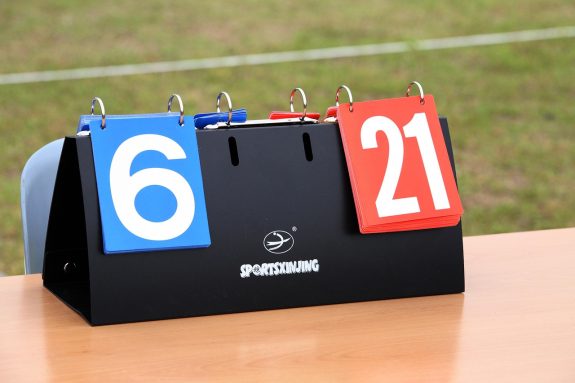
A precise head-to-head number can answer a much broader question than intended.
An H2H page may list 18 meetings, even though only 12 were ordinary league fixtures. The other six could include a domestic cup tie, promotion playoffs, a super cup, or a preseason friendly. Every score can be correct while the total remains unsuitable for league-only comparison.
Top Free Bets for October
BetUS
200% up to $1,000
18+. Full T&C's apply. Sports bonus: 100% match up to $500. Casino bonus: 100% match up to $500. Enter promo code NEW200 at deposit and get up to a $1000 bonus. Valid on your first three (3) deposits. Available for all deposit methods. Minimum deposit of $50.
18+. Full terms apply. The Bet Back Bonus is available for new customers on first-time deposits of $50 or more. To redeem, select the offer in the cashier while completing your first deposit. Make your pick(s) in the Sportsbook and then select ‘Opt In to Use Your Bonus’. A Bet Back Bonus pop-up will display, select ‘Claim’ and then enter the risk amount to place your bet. If it wins, you keep your profits. If it loses, get 100% of your risk refunded as Free Play with only 1-time rollover. Free Play can then be used to place bets in the Sportsbook and earn cash. Additional T&Cs apply, please visit MyBookie to access the Help Center or contact Live Chat for more details.
18+. Full T&C's apply. This promotion is available only to new accounts in North America. Freeplay amount must be wagered five times (5x rollover) before it becomes eligible for withdrawal. Only prematch (sportsbook) bets count toward the 5x rollover requirement. Each person may claim only one bonus. If a customer creates multiple accounts to exploit this promotion, bet105 will mark all related accounts as ineligible and reclaim the funds. If a client receives more than two free bets without making a deposit, any winnings from those bets will be forfeited. This promotion applies only to the initial deposit or if specifically assigned by bet105.
18+. Full terms apply. New BUSR members only. Minimum deposit of $50 required per qualifying deposits. Codes 300SB1, 300SB2, and 300SB3 must be entered at the time of each corresponding deposit.
Each code is valid one time only. Each bonus code must be claimed at least 24 hours apart. Only one promo code may be applied per deposit. A 20x rollover requirement applies to the combined total of your initial deposit and bonus before any withdrawal can be made. Redeemable in the Sportsbook only. BUSR management reserves the right to modify, suspend, or cancel this promotion at any time. Redeem each promo code in the cashier to get your bonus. Must be 18 or older. Please gamble responsibly. General House Rules Apply.
18+. Full terms apply. 100% up to $500 Bonus. Valid for non-crypto payment methods only. Minimum deposit amount $50. This offer is not available to customers from Canada or Mexico. The bonus code must be redeemed immediately after the deposit and before a wager has been placed. The sum of the deposit and the bonus are subject to rollover requirements of 12x at min. odds of -200 (1.5) before a new code can be redeemed. Max. $500 of each bet count towards the rollover requirements. Only bets placed on options that take place count towards the rollover requirements. Wagers on Horse Racing and Boosted Odds do not count towards the rollover requirements. All general Everygame Sportsbook rules apply.
21+. Full T&C's apply. Bonus: 35% of qualifying deposit, up to $105. Rollover: 8× (only sports action counts towards the rollover) deposit + bonus. Expiry: 7 days after credit. Hold period: 2 weeks. Payouts allowed only after rollover and hold period are completed. Example: Deposit $200 → Receive $50 Sports Free Play. Sports Free Play Rules: see the BetAnything General Reward Rules for eligible sports, wager types, odds, and rollover rules.
18+. Full T&C's apply. This bonus can only be redeemed on your first deposit. Rollover is 5x Sports/5x Horses/30x Casino on both the initial deposit and the bonus amount. Rollover in our Sportsbook, for winning wagers, will be determined by the lesser of your risk or win amount at the time of wager settlement; for losing wagers your risk amount will be credited to your rollover contribution. Bonus funds cannot be used for play on Live Dealer games. Live Dealer play does not count toward meeting Casino rollover requirements for withdrawal. If a withdrawal is made before the bonus terms are met, all bonus funds as well as any money earned by wagering the bonus will be forfeited.
The result depends on two things: the chosen scope and the database’s competition labels. Scope determines whether “league” means regular season only or also includes championship and relegation rounds. Classification determines whether the filter actually follows that rule. One provider may tag playoffs as league matches; another may store them as a separate competition. Checking the competition name beside each fixture is therefore more reliable than trusting the headline total alone.
Define the scope
Set the inclusion rule
Fix the competition, period, and playoff policy before collecting results.
Before searching, write a one-sentence rule that every fixture must pass. For example: Include matches between the two clubs played in the 2022–23 English Premier League regular season; exclude all playoff and non-league fixtures. Naming the exact domestic league matters because clubs may meet in several competitions during the same season.
Set three boundaries:
Competition: Use one named league, not a broad label such as “domestic matches.”
Period: Choose a specific season or fixed start and end dates. Date ranges are useful when league calendars or season labels differ between sources.
Playoffs: State whether promotion, championship, relegation, or postseason playoffs count. Do not leave this implicit.
A fixture qualifies only when it meets all three conditions. Matches from domestic cups, league cups, continental tournaments, preseason events, testimonials, and other friendlies should be excluded—even when the same teams and venue appear. This also resolves the common uncertainty over whether overall head-to-head records include friendly matches: an overall total may include them, but a league-only result set should not.
Keep the rule beside the working list. Borderline fixtures can then be checked against a fixed standard rather than judged inconsistently.
Source checklist
Choose a source that shows its work
01
Competition labels
Each match should display its competition, ideally with stage or round details. This makes league fixtures distinguishable from cups and friendlies.
Look for
A visible competition name beside every result
Avoid
Results grouped under a vague “all matches” heading
02
Fixture-level records
The underlying dates, scores, and home-away order should be available for inspection. Individual records make suspicious totals easier to verify.
Look for
A match list supporting every aggregate figure
Avoid
Win-draw-loss totals with no supporting fixtures
03
Season and date controls
Useful filters include season, custom date range, or both. The active filter should remain visible after results load.
Look for
Clear controls and a displayed active period
Avoid
Hidden defaults or filters that silently reset
04
Stable match details
Opening a fixture should preserve the same competition and date information shown in the list.
Look for
Consistent labels across summary and detail pages
Avoid
Conflicting metadata between different views
Trust check
Prefer evidence over convenience
A polished percentage is not automatically reliable. A plain, inspectable match list is usually more useful because every result can be checked against the intended filters. The broader guide to interpreting football H2H statistics provides context for assessing other figures once the fixture set is sound.
Confirm both team identities
Open one club’s profile, choose the opponent from its head-to-head tool, and confirm the resulting page names both sides. Use this shared H2H page rather than a search-result preview, a single-team fixture list, or a similarly titled matchup page.
Before counting, compare the page’s identity details with the intended teams:
Squad level: senior, reserve, B team, academy, or under-21.
Team category: men’s or women’s side.
Club identity: badge, country, city, stadium, and competition history.
Name history: former names, mergers, relocations, or recent rebranding.
Similar names can conceal unrelated clubs, while reserve and youth teams may appear under only a small suffix such as “II,” “B,” or “U23.” A renamed club may also have older fixtures filed under its previous name. Check at least one listed match against its date, venue, and competition before applying any league filter.
Do not count from the name alone
If either team’s identity remains uncertain, stop. A perfectly filtered H2H page for the wrong side still produces the wrong total.
Apply the league and season filters
A country filter is not a league filter. Selecting England, for example, may retain Premier League matches alongside FA Cup and League Cup fixtures. Choose the exact competition name or ID, then check several fixture rows for the matching league label.
Set the season separately. Confirm whether the site uses split-year labels such as 2023/24, a starting year such as 2023, or calendar years. Date-range filters can work, but postponed or rescheduled matches near season boundaries deserve a closer look.
After applying each filter, compare the page before and after. Three things should respond:
unrelated cup or playoff fixtures disappear;
every remaining row carries the intended competition label;
summary figures, such as matches played, wins, draws, losses, and goals, recalculate.
If the fixture list changes but the totals do not, the summary may still represent all competitions or may be cached. Refreshing the page, reopening the filtered view, or calculating totals directly from the visible fixtures is safer than trusting an unchanged headline record.
Watch for retained filters
Some sites preserve an earlier competition or season selection in the URL or browser session. Clear all filters first, then apply competition and season again in that order.
Common traps
A league tag does not guarantee a standard fixture
Assumption
Every match under the league name belongs to the regular schedule.
Reality
Playoffs, split phases, and championship or relegation rounds may share the main league label.
What reveals it
Check the round field for terms such as “Playoff,” “Championship Group,” or numbering that restarts after the split.
Assumption
A listed result always represents a completed match.
Reality
Abandoned, postponed, awarded, or voided fixtures can remain in head-to-head lists.
What reveals it
A status marker, unusual score, missing minute data, or a replacement date can distinguish the official outcome from an incomplete event.
Assumption
Different databases classify the same fixture identically.
Reality
One provider may treat a playoff as part of the league while another uses a separate competition entry.
What reveals it
This explains why head-to-head sites classify matches differently; compare the full competition label, phase, and season rather than relying on the badge.
Quick check
Read the fixture row before counting it
Confirm four fields together: date, round or phase, venue, and competition label. A neutral venue may indicate a final or playoff; a date outside the normal calendar may signal postponement or abandonment. Any mismatch deserves a closer look.
Manual fallback
Build a league-only record from the fixture list
Reveal the complete history
Keep selecting Load more, advancing through pages, or expanding seasons until the earliest relevant date appears. Record the source and access date.
Create a fixture audit table
Give each fixture one row with date, teams, score, status, competition, season, stage, source URL or match ID, and an include/exclude decision.
Classify every fixture
Apply the predetermined league and playoff rules row by row. Mark unclear competition labels as uncertain rather than guessing from nearby fixtures.
Remove duplicate listings
Deduplicate by match ID where possible. Otherwise, compare date, home team, away team, and score; reversed or repeated listings must count only once.
Tally completed included matches
Count a win only when the selected team outscored the opponent, and a draw when scores were level. Check that wins, draws, and losses equal the number of included completed fixtures.
Do not stop at the visible first page
Head-to-head pages often load only recent fixtures. A manual total remains incomplete until every page, season tab, collapsed group, or load-more control has been exhausted. Postponed, cancelled, and abandoned matches should remain in the audit table but not enter completed-match totals.
Verify the total elsewhere
Reconcile differences fixture by fixture
Run the same league, date-range, and playoff rules through a second reputable database. An official league or federation archive is ideal, but a well-maintained statistical database can also provide a useful independent check.
Compare more than the headline win-draw-loss totals. Check the fixture count, dates, scores, competition labels, and team names. A record of when the two teams first played can help reveal whether one source includes an earlier club identity or predecessor.
Resolve mismatches by match
If the totals differ, place both fixture lists side by side and identify the first unmatched row. Common causes include:
Older fixtures missing from a modern database
Playoffs or championship rounds classified differently
Abandoned, voided, or expunged matches retained by only one source
Club-name changes, mergers, or reserve-team labels splitting the historical record
Duplicate entries caused by date or venue corrections
Record each disputed fixture and the reason for including or excluding it. The final total should follow the stated counting rule, not whichever source displays the more appealing number. If the evidence remains inconclusive, report the uncertainty and note the affected match rather than forcing an exact answer.
Key Takeaways
Fix the scopeName the exact competition, seasons or dates, and whether playoffs are included.
Show the recordGive total matches, wins for each team, draws, and—if useful—goals scored.
Leave a trailLink or name the source and include the date on which the fixtures were retrieved.
Conclusion
Present the result as a reproducible statement: “In [league], from [start] to [end], excluding/including [playoff rule], Team A and Team B played [N] matches: Team A [W] wins, Team B [W] wins, and [D] draws ([GF–GA] goals). Source: [provider], retrieved [date].”
This wording prevents a correct total from becoming misleading when a database later changes its archive or competition labels.
Top Free Bets for October
BetUS
200% up to $1,000
18+. Full T&C's apply. Sports bonus: 100% match up to $500. Casino bonus: 100% match up to $500. Enter promo code NEW200 at deposit and get up to a $1000 bonus. Valid on your first three (3) deposits. Available for all deposit methods. Minimum deposit of $50.
18+. Full terms apply. The Bet Back Bonus is available for new customers on first-time deposits of $50 or more. To redeem, select the offer in the cashier while completing your first deposit. Make your pick(s) in the Sportsbook and then select ‘Opt In to Use Your Bonus’. A Bet Back Bonus pop-up will display, select ‘Claim’ and then enter the risk amount to place your bet. If it wins, you keep your profits. If it loses, get 100% of your risk refunded as Free Play with only 1-time rollover. Free Play can then be used to place bets in the Sportsbook and earn cash. Additional T&Cs apply, please visit MyBookie to access the Help Center or contact Live Chat for more details.
18+. Full T&C's apply. This promotion is available only to new accounts in North America. Freeplay amount must be wagered five times (5x rollover) before it becomes eligible for withdrawal. Only prematch (sportsbook) bets count toward the 5x rollover requirement. Each person may claim only one bonus. If a customer creates multiple accounts to exploit this promotion, bet105 will mark all related accounts as ineligible and reclaim the funds. If a client receives more than two free bets without making a deposit, any winnings from those bets will be forfeited. This promotion applies only to the initial deposit or if specifically assigned by bet105.
18+. Full terms apply. New BUSR members only. Minimum deposit of $50 required per qualifying deposits. Codes 300SB1, 300SB2, and 300SB3 must be entered at the time of each corresponding deposit.
Each code is valid one time only. Each bonus code must be claimed at least 24 hours apart. Only one promo code may be applied per deposit. A 20x rollover requirement applies to the combined total of your initial deposit and bonus before any withdrawal can be made. Redeemable in the Sportsbook only. BUSR management reserves the right to modify, suspend, or cancel this promotion at any time. Redeem each promo code in the cashier to get your bonus. Must be 18 or older. Please gamble responsibly. General House Rules Apply.
18+. Full terms apply. 100% up to $500 Bonus. Valid for non-crypto payment methods only. Minimum deposit amount $50. This offer is not available to customers from Canada or Mexico. The bonus code must be redeemed immediately after the deposit and before a wager has been placed. The sum of the deposit and the bonus are subject to rollover requirements of 12x at min. odds of -200 (1.5) before a new code can be redeemed. Max. $500 of each bet count towards the rollover requirements. Only bets placed on options that take place count towards the rollover requirements. Wagers on Horse Racing and Boosted Odds do not count towards the rollover requirements. All general Everygame Sportsbook rules apply.
21+. Full T&C's apply. Bonus: 35% of qualifying deposit, up to $105. Rollover: 8× (only sports action counts towards the rollover) deposit + bonus. Expiry: 7 days after credit. Hold period: 2 weeks. Payouts allowed only after rollover and hold period are completed. Example: Deposit $200 → Receive $50 Sports Free Play. Sports Free Play Rules: see the BetAnything General Reward Rules for eligible sports, wager types, odds, and rollover rules.
18+. Full T&C's apply. This bonus can only be redeemed on your first deposit. Rollover is 5x Sports/5x Horses/30x Casino on both the initial deposit and the bonus amount. Rollover in our Sportsbook, for winning wagers, will be determined by the lesser of your risk or win amount at the time of wager settlement; for losing wagers your risk amount will be credited to your rollover contribution. Bonus funds cannot be used for play on Live Dealer games. Live Dealer play does not count toward meeting Casino rollover requirements for withdrawal. If a withdrawal is made before the bonus terms are met, all bonus funds as well as any money earned by wagering the bonus will be forfeited.
Hi I'm Andy and I love to report on the latest football scores and Tables. I also like to have a bet on the football and occasionaly on the horses. On this website I have new bookmaker offers listed that will give you free bets and bonuses to help you beat the bookies. Enjoy your stay.